Let’s be honest: nothing beats the convenience of a quick click to get a bag of crunchy almonds or buttery cashews delivered right to your doorstep. We’ve all been there, scrolling through options late at night, looking for that perfect healthy snack to keep in the desk drawer or the kitchen pantry. But if you’ve ever opened a package of dry fruits online only to find shriveled, dusty nuts or: worse: something that tastes like it’s been sitting in a warehouse since the last decade, you know the struggle is real.
When you buy dry fruits online, you aren't just buying food; you’re investing in your health. You’re looking for those antioxidants, those healthy fats, and that natural energy boost. At Thottam Farm Fresh, we believe you shouldn't have to play "snack roulette" every time you place an order.
So, how do you separate the premium harvests from the industrial leftovers? We’ve put together the ultimate quality checklist to help you navigate the world of digital dry fruit shopping like a pro.
1. Trace the Roots: Where Do They Come From?
The first thing you should look for isn't the price: it's the origin. Transparent sellers will always tell you where their products come from. Why does this matter? Because the soil, climate, and farming practices of a specific region dictate the flavor and nutrient profile of the fruit.
For example, when you buy from farmers directly or through a brand that sources from specific estates, you’re getting a product that hasn't changed hands ten times. At Thottam, we pride ourselves on our direct-from-farm philosophy. If a website is vague about the origin, treat it as a red flag. You want to know if those walnuts are from the valleys of Kashmir or if your cashews were processed in the traditional hubs of Kerala.
2. Size and Uniformity: The "Grade" Game
In the world of dry fruits, size actually does matter. Dry fruits are graded based on their size, color, and weight. When you’re looking at almonds or cashews, you’ll often see terms like "Jumbo," "King Size," or numerical grades like W180 or W240 for cashews.
- Uniformity: Are the pieces all the same size? If a bag is full of halves, quarters, and dust, it’s likely a lower-grade batch or has been handled poorly.
- Plumpness: Premium dry fruits should look robust and well-nourished. They shouldn't look "starved" or shriveled unless that’s their natural state (like certain types of raisins).
High-quality dry fruits online will usually display their grade clearly. If you see a deal that looks too good to be true, it’s often because the seller is shipping smaller, "broken" grades that lack the crunch and visual appeal of premium whole nuts.
3. Check the "Natural" Vibe: No Sugars, No Sulfites
This is where many commercial brands trip up. To make dry fruits look "prettier" or last longer on a shelf, some manufacturers add artificial colors, preservatives, or even sugar coatings.
Take dried cranberries or mangoes, for instance. Often, they are more like candy than fruit because of the added refined sugar. Or consider the bright orange color of some dried apricots: that’s usually thanks to Sulfur Dioxide (E220). While it keeps the color vibrant, it’s an allergen for many and definitely not "100% natural."
When you browse for dry fruits online, check the ingredient list. It should ideally have one ingredient: the fruit itself. If you see words you can't pronounce, keep moving. We stick to naturally sun-dried or air-dried processes that preserve the fruit's integrity without the chemical facelift.

4. Visual Indicators: Color and Texture
You can tell a lot about a nut or fruit just by looking at a high-resolution photo (and then checking the actual product when it arrives).
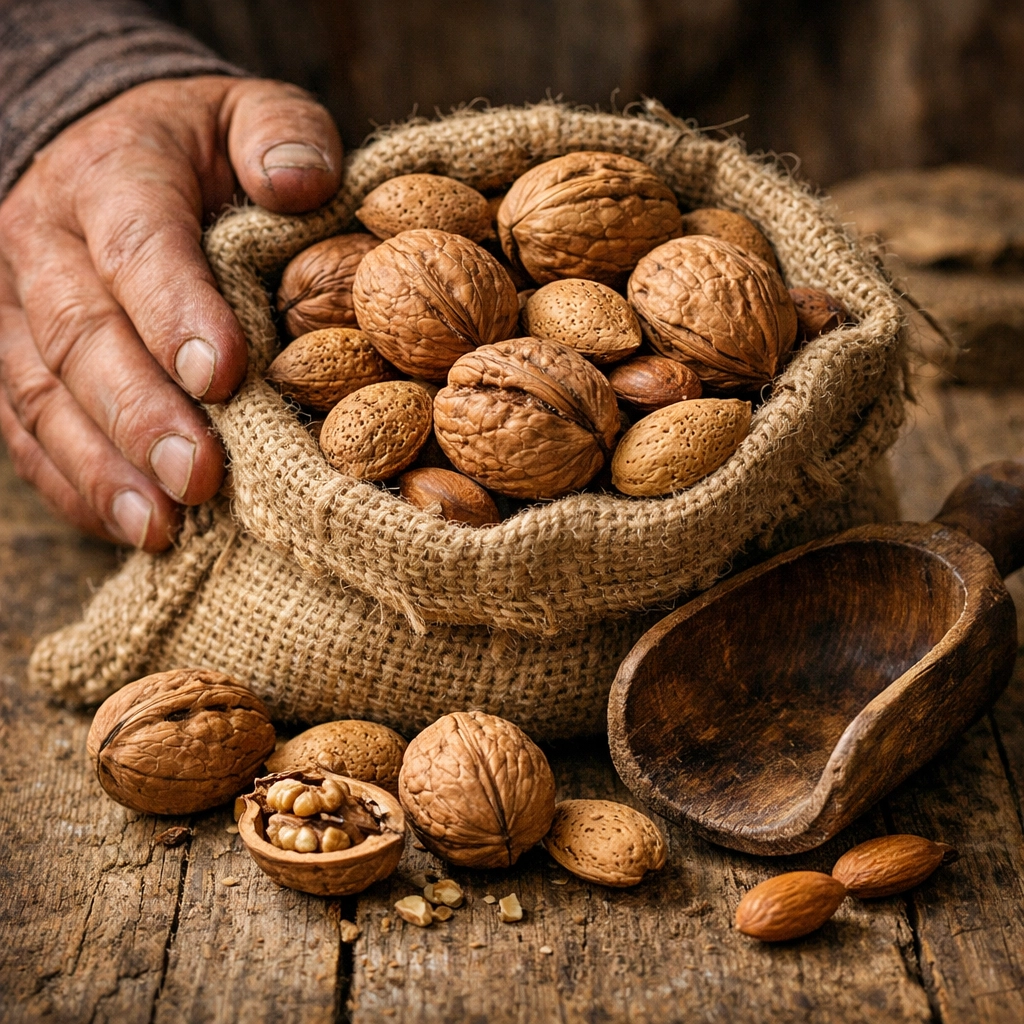
- Almonds: Should have a consistent, rich brown skin with no white "scars" or holes (which could indicate insect damage).
- Walnuts: Look for light-colored kernels. Darker walnuts can sometimes be more bitter or closer to going rancid.
- Pistachios: The shells should be naturally beige (not bleached white), and the nut inside should be a vibrant green.
- Texture: If you can see "powder" at the bottom of the bag in the product photos or reviews, the stock is likely old. Fresh dry fruits have a clean, glossy, or matte finish depending on the variety, without an oily residue on the packaging.
5. The Packaging: Science Meets Freshness
The biggest enemy of dry fruits is oxygen and moisture. Oxygen makes the natural oils in nuts go rancid (that "stale" smell), and moisture makes them lose their crunch or: even worse: promotes mold.
When you buy dry fruits, look for:
- Vacuum-Sealed Packs: This is the gold standard for maintaining freshness from the farm to your door.
- Resealable Pouches: Once you open the pack, you need a way to keep the air out.
- Opaque or UV-Protected Packaging: Light can also degrade the quality of oils in nuts over time.
At Thottam Farm Fresh, we don't just toss things in a plastic bag. We use hygienic, high-quality packaging designed to lock in that "just-picked" flavor.

6. Certifications and Purity Standards
How do you know the "organic" label isn't just marketing fluff? You look for the stamps. In India, FSSAI certification is a must-have for food safety. If you’re looking to buy organic products, check for recognized organic certifications that prove no synthetic pesticides or fertilizers were used during cultivation.
Purity isn't just about what's not there; it's about the standard of what is. A reputable online store will be proud to display their certifications because it shows they’ve gone the extra mile to ensure your safety. We believe in complete transparency: whether it’s our spices or our dry fruits, purity is the heartbeat of our business.
7. The Power of the Community: Reviews and Real Photos
The beauty of the internet is that you don't have to take the seller's word for it. Always scroll down to the customer review section. But don't just look at the star rating; look at the content of the reviews.
- Are people mentioning the "crunch"? That’s a sign of freshness.
- Are there photos of the actual product? Real-life photos from customers are much more telling than professional studio shots.
- Consistency: Do the reviews span several months? This tells you the seller maintains quality year-round, not just during harvest season.
If you see people raving about the aroma and the "bold" taste, you’re likely on the right track.

Why Quality Matters for Your Daily Routine
Choosing to buy dry fruits online is a commitment to a better lifestyle. Whether you’re soaking almonds overnight for your morning ritual, tossing walnuts into your salad for some brain-boosting Omega-3s, or grabbing a handful of cashews to tide you over during a long meeting, the quality of those fruits dictates the benefits you get.
Low-quality dry fruits lose their essential oils and vitamins. When a nut goes rancid, it doesn't just taste bad: it can actually create oxidative stress in your body, which is the exact opposite of what you want from a "superfood."
By following this checklist, you aren't just being "picky": you’re being a conscious consumer. You’re choosing products that are treated with respect from the moment they are harvested to the moment they reach your kitchen.
Final Thoughts: The Thottam Difference
We know you have a lot of choices when searching for dry fruits online. At Thottam Farm Fresh, we treat every bag of nuts and every jar of fruit as a representation of our heritage. We source directly, process naturally, and package with care because we want you to taste the difference that "farm-fresh" actually makes.
Next time you’re restocking your pantry, use this checklist. Look for the color, ask about the origin, and never settle for anything less than premium. Your body (and your taste buds) will thank you.
Ready to experience the real deal? Explore our curated selection of farm-fresh dry fruits and nuts and taste what happens when quality is never compromised.