Take a look in your pantry. If you’re like most people, you probably have a plastic squeeze bottle shaped like a bear or a clear glass jar sitting on the shelf. It’s sweet, it’s golden, and it’s labeled "Honey." But here is the hard truth: if that honey looks perfectly clear, stays liquid forever, and tastes just like plain sugar, you’re missing out on one of nature’s most potent medicines.
At Thottam Farm Fresh, we believe that the closer a product is to its source, the more power it holds. That’s why we’re taking you through the Wild Honey Masterclass. We’re moving past the industrial, over-processed syrups and diving deep into the world of wild forest honey: the dark, complex, and unrefined "liquid wellness" that has been revered for millennia.
If you’ve been looking to buy organic honey online, this guide will help you understand exactly what makes forest-sourced honey the undisputed king of sweeteners.
The Forest vs. The Factory: What’s the Difference?
The honey you find in a typical supermarket is often a product of "commercial beekeeping." In these systems, bees are usually kept on a single type of crop (monoculture), like clover or canola. To keep up with global demand, this honey is frequently ultra-filtered to remove pollen: which is where the nutrients live: and flash-heated (pasteurized) to prevent crystallization. This results in a clear, shelf-stable syrup that is essentially "dead." All the enzymes and delicate floral notes are destroyed in the heat.
In contrast, Wild Forest Honey is a different beast entirely. It is collected by indigenous tribes or traditional foragers from the deep interiors of forests, often from the hives of Apis dorsata (the giant rock bee). These bees forage on thousands of different species of wildflowers, medicinal herbs, and forest trees.
Why Texture and Color Matter
When you find forest honey online India, you’ll notice it’s rarely a bright, translucent yellow. Instead, it ranges from deep amber to almost black. It’s often cloudy because it contains traces of propolis, wax, and life-giving pollen. It might even crystallize over time: and that’s a good thing! Crystallization is a sign of raw, unheated honey.
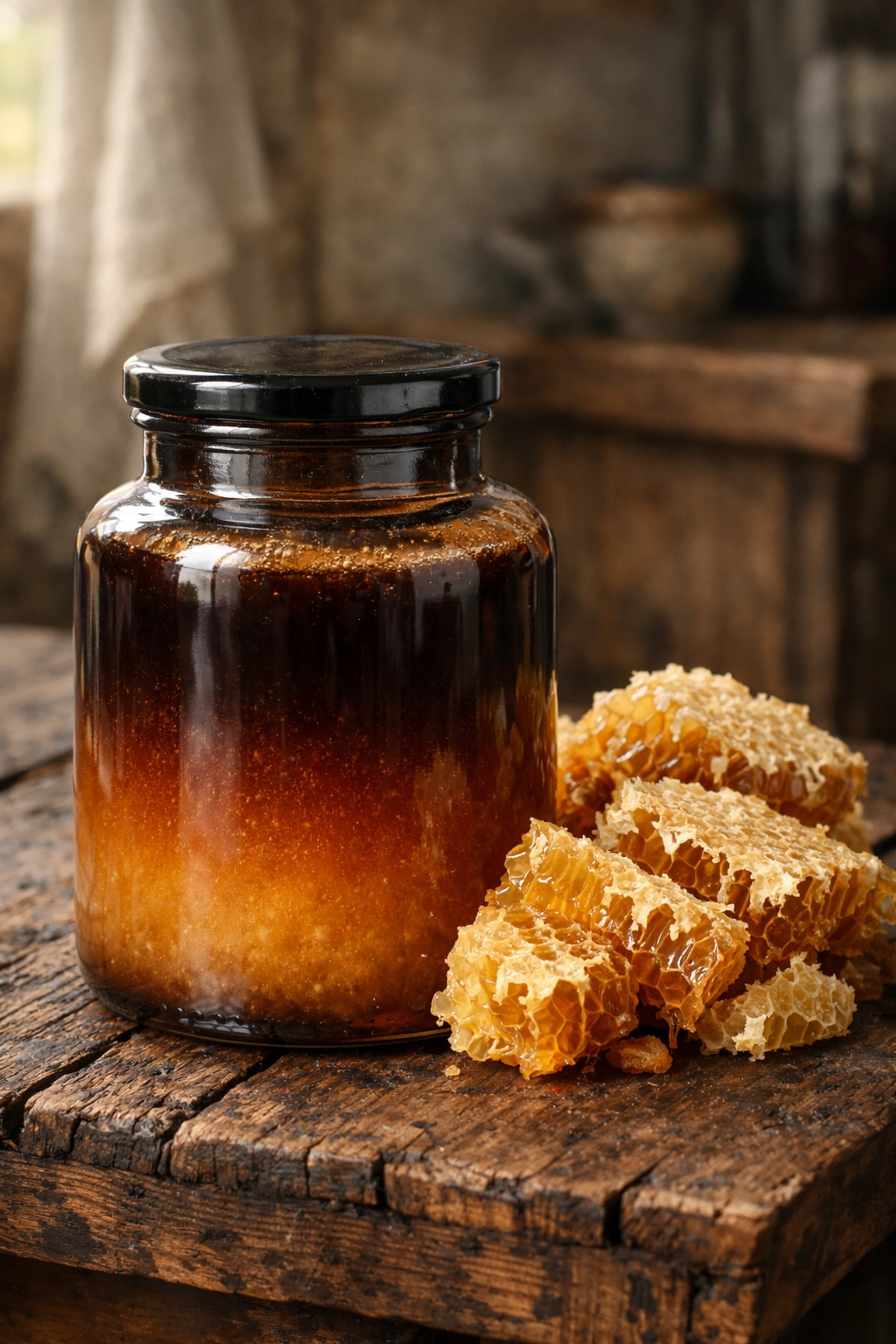
Visual: A rustic, dark glass jar of thick, opaque wild honey sitting on a weathered wooden table with chunks of raw honeycomb nearby.
The Science of "Liquid Wellness"
Why do we call it liquid wellness? Because wild forest honey is essentially a concentrated extract of the forest’s biodiversity. While commercial honey is mostly sugar, wild honey is a complex cocktail of bioactive compounds.
1. The Antioxidant Powerhouse
Wild honey is rich in flavonoids and polyphenols. These are the same compounds found in superfoods like blueberries and green tea. They act as the body’s internal cleanup crew, hunting down free radicals that cause aging and disease. Because forest bees forage on medicinal plants, their honey often contains unique phytochemicals that you simply won’t find in farm-raised honey.
2. The Enzyme Factor
Raw honey contains live enzymes like diastase and invertase. These enzymes are what help your body break down food more efficiently. This is why a spoonful of honey in warm water is a centuries-old remedy for improving digestion.
3. Mineral Density
While white sugar has zero nutritional value, wild forest honey is packed with essential minerals including:
- Magnesium and Potassium: Essential for heart health and muscle function.
- Zinc and Iron: Critical for a robust immune system.
- Vitamin C and B6: For energy metabolism and skin health.
Sourcing the "Queen of Spices" Companion
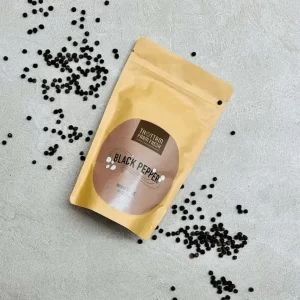
At Thottam Farm Fresh, we often talk about the synergy between our products. Just as our Tellicherry Black Pepper provides the heat of the piperine, wild honey provides the soothing, anti-inflammatory balance. When you mix high-grade Lakadong Turmeric with a spoonful of wild forest honey, you aren't just making a drink; you’re creating an ancient medicinal tonic.
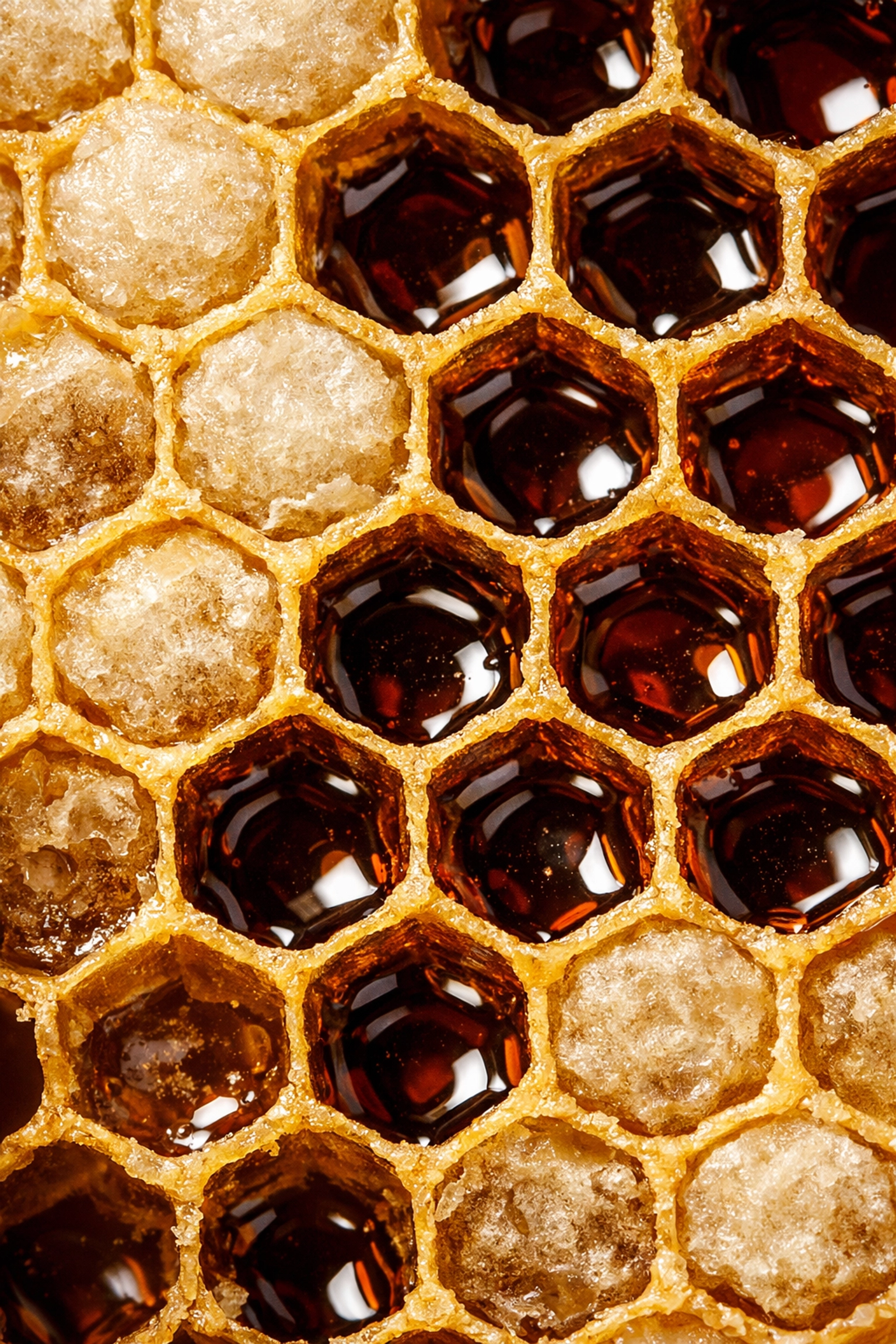
Visual: Close-up macro shot of raw, textured honeycomb showing the intricate hexagonal cells filled with dark, viscous honey.
The Flavor Wheel: Woody, Earthy, and Bold
If you think honey only tastes like "sweet," prepare to have your palate challenged. Because wild bees are generalist foragers, the flavor of the honey changes with the season and the specific trees in bloom.
- The Aroma: It doesn't smell like candy. It smells like damp earth, crushed leaves, and spicy floral blossoms.
- The Taste: You might catch notes of molasses, smoky oak, or even a hint of bitterness from medicinal herbs.
- The Finish: Unlike refined sugar, which leaves a cloying sweetness in the throat, wild honey has a clean finish that often leaves a warm, tingling sensation: a sign of its antibacterial properties.
Health Benefits: More Than Just a Sweetener
The research into wild honey shows that it’s one of the most versatile tools in your wellness kit.
Cardiovascular and Metabolic Support
Unlike refined sugar, which has a Glycemic Index (GI) of around 105, wild honey typically sits between 54 and 59. This lower GI means it provides a sustained energy release without the "crash." Furthermore, studies show that the antioxidants in honey can help reduce LDL (bad) cholesterol and inflammation in the blood vessel walls.
Respiratory Relief
There is a reason your grandmother gave you honey for a cough. Wild honey is a natural demulcent, meaning it forms a soothing film over the throat. Its antibacterial properties help fight the underlying infection, making it more effective than many over-the-counter syrups. It’s the perfect addition to a hot cup of Masala Tea.
Skin and Tissue Healing
Applied topically, wild honey is a miracle worker. Its low pH and naturally occurring hydrogen peroxide make it an inhospitable environment for bacteria. It has been used for centuries to treat minor burns and wounds, and it’s a secret weapon for those dealing with acne or dry skin.
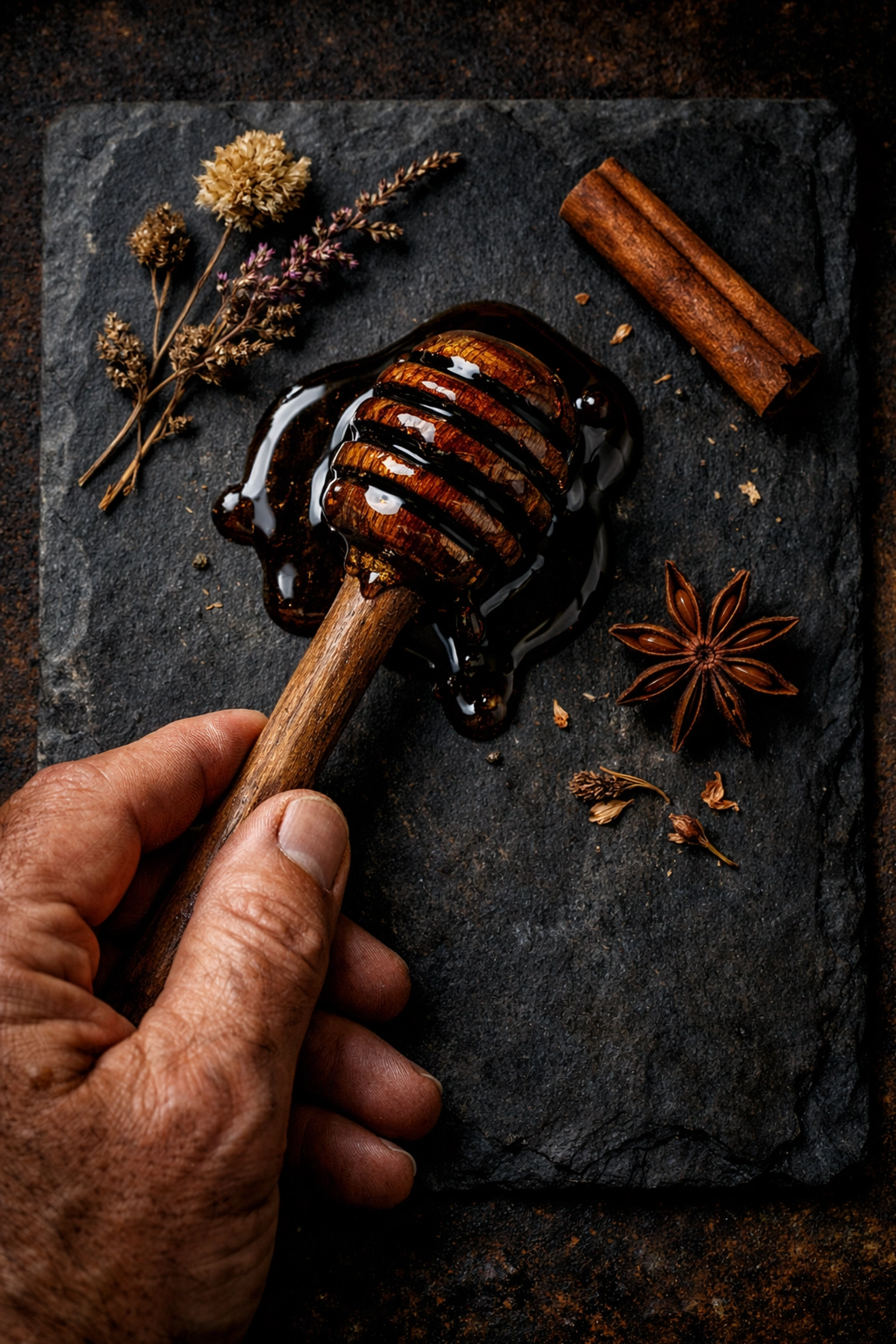
Visual: A wooden honey dipper resting on a piece of slate, covered in thick, dark forest honey with a few dried wildflowers scattered around.
How to Spot the Real Deal
When you are looking to buy forest honey online India, keep these "Wild Honey Rules" in mind:
- The Thumb Test: Place a small drop of honey on your thumb. If it spreads or spills immediately, it’s likely watered down or contains added sugar syrup. Real wild honey is thick and stays intact.
- The Water Test: Drop a spoonful into a glass of water. Real honey will sink to the bottom as a solid lump. Fake honey will start dissolving immediately.
- The Flame Test: If you dip a matchstick in real honey and strike it, it will light. If there is moisture or added syrup, it won’t.
- The Scent: If it has no scent at all, it’s probably been ultra-filtered and heated.
Integrating Wild Honey Into Your Lifestyle
You don’t need to wait for a sore throat to enjoy the benefits of "liquid gold." Here are a few ways to elevate your daily routine:
- The Morning Ritual: Stir a teaspoon of wild honey into warm (not boiling) lemon water. Adding it to boiling water can kill the beneficial enzymes, so let your drink cool slightly first.
- The Post-Workout Fuel: Mix honey with some Cashew Nuts or Walnuts for a quick, natural energy boost that aids muscle recovery.
- The Gourmet Glaze: Use it as a base for salad dressings or as a glaze for roasted carrots and sweet potatoes. The earthy notes of forest honey pair beautifully with root vegetables.
- The Natural Sweetener: Swap out sugar in your breakfast bowl of summer dry fruits for a drizzle of wild honey.
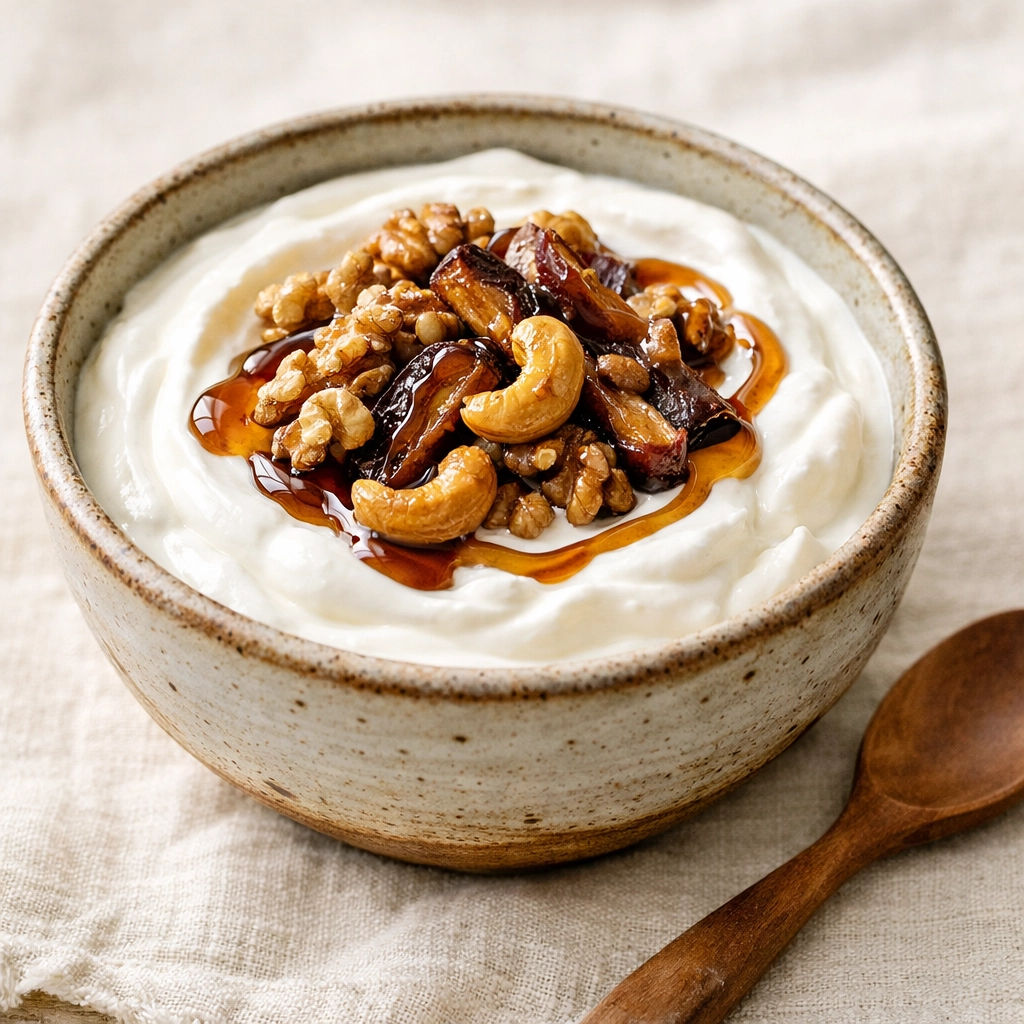
Visual: A healthy breakfast bowl with yogurt, nuts, and a generous swirl of dark, unrefined forest honey.
A Note on Heritage and Sustainability
When you choose wild forest honey from Thottam Farm Fresh, you aren't just buying a product. You are supporting the preservation of forest ecosystems and the livelihoods of traditional honey-gathering communities. These foragers use age-old techniques to ensure the bees are not harmed and the forest remains vibrant for generations to come.
Wild honey is a reminder that nature provides everything we need to thrive. It’s a complex, living food that deserves a place of honor in your kitchen.
Are you ready to experience the real taste of the wild? Explore our collection and find out why this isn't just honey: it's a masterclass in wellness.
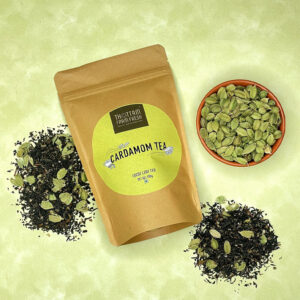
Curious about more traditional health secrets? Check out our guide on the Benefits of Cardamom or learn how we process our Dried Ginger for maximum potency.