If you walk into any neighborhood grocery store and pick up a jar labeled “Cinnamon,” there is a 95% chance you aren’t actually holding true cinnamon. What you likely have in your hand is Cassia, a cheaper, harsher, and potentially problematic relative of the spice you thought you were buying.
For most of us, cinnamon is the scent of comfort. It’s the warmth of a morning latte, the soul of a festive cake, and the secret depth in a spicy curry. But as we become more conscious about what we put into our bodies, the distinction between “Real Cinnamon” (Ceylon) and “Common Cinnamon” (Cassia) has moved from a culinary trivia point to a vital health consideration.
At Thottam Farm Fresh, we believe that purity shouldn’t be a luxury. However, when it comes to Ceylon cinnamon, there are levels to quality. Today, we’re diving deep into why the H1 Grade of Ceylon cinnamon is the gold standard for your kitchen and your health.
The Great Cinnamon Deception: Cassia vs. Ceylon
To the untrained eye, all cinnamon looks like rolled-up tree bark. But biologically and chemically, they are worlds apart.
What is Cassia?
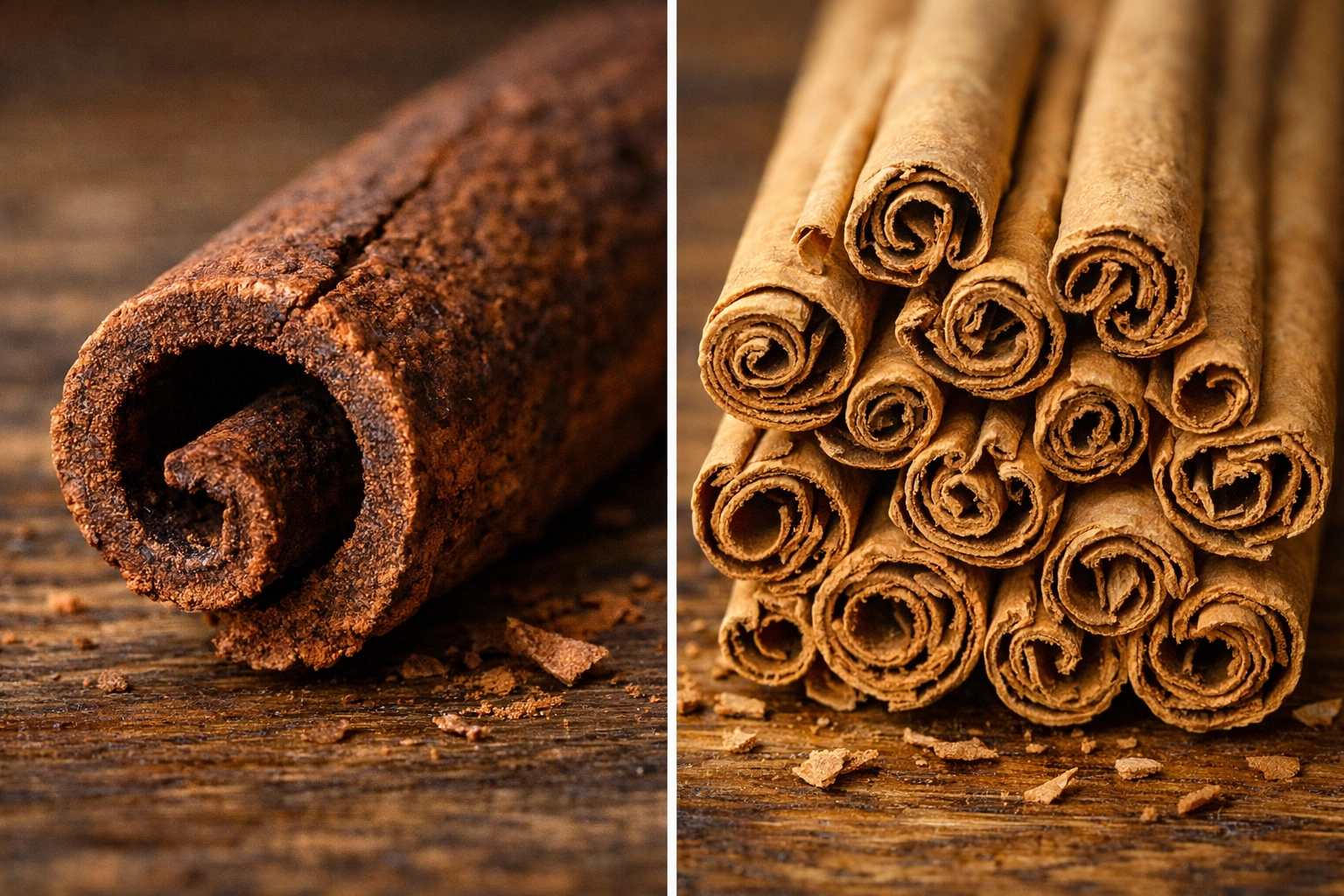
Cassia (Cinnamomum cassia) mostly originates from China, Vietnam, and Indonesia. It is thick, hard, and has a dark brown-red color. It tastes “hot” and spicy because it contains high levels of cinnamaldehyde. Because it is cheap to produce and grows in abundance, it has become the global commodity standard.
What is Ceylon?
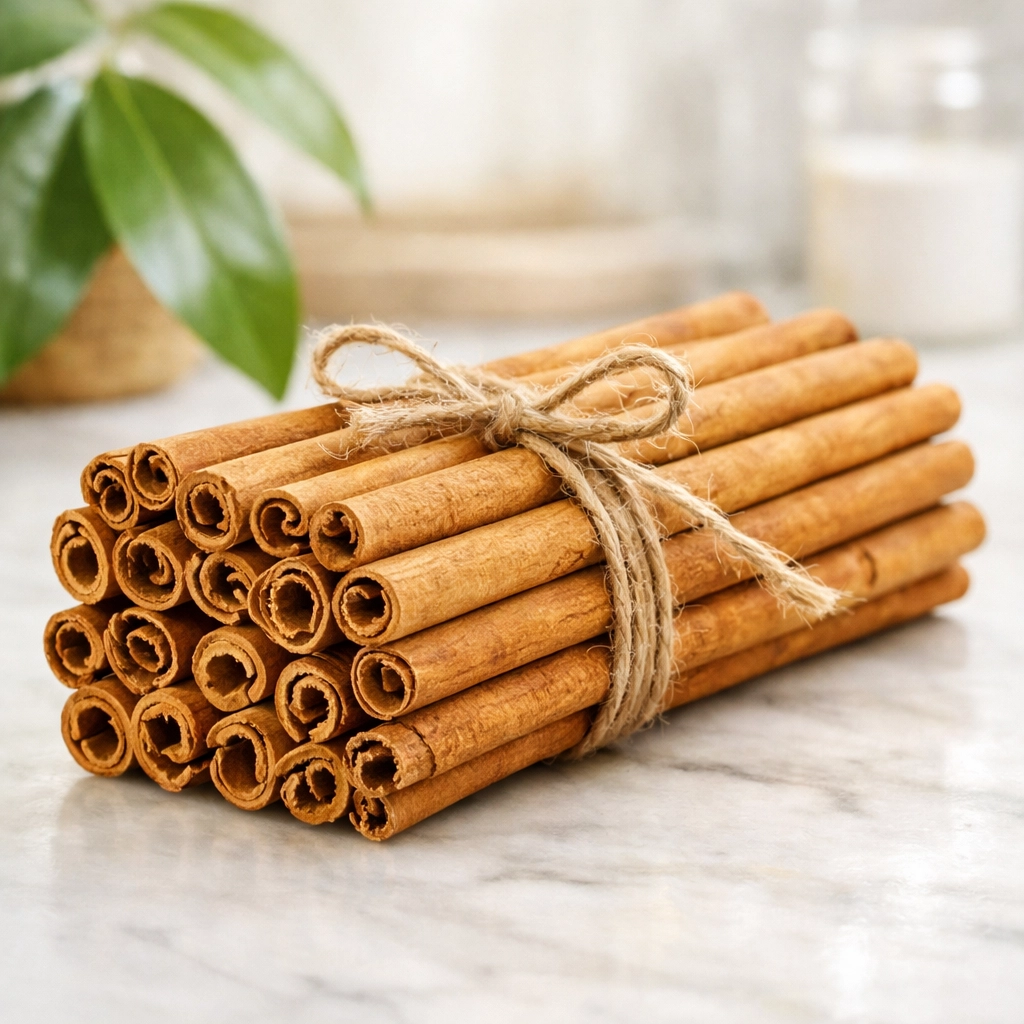
Ceylon cinnamon (Cinnamomum verum), often called “True Cinnamon,” is native to Sri Lanka. It is a completely different species. The bark is harvested in thin, delicate layers that are manually rolled into “quills” that resemble a cigar. It possesses a sophisticated flavor profile, floral, citrusy, and subtly sweet.
The Coumarin Factor: A Health Perspective
The most significant reason to switch from Cassia to Ceylon isn’t just the flavor, it’s a compound called Coumarin.
Coumarin is a naturally occurring flavoring substance found in plants. In small doses, it’s harmless. However, Cassia cinnamon contains high concentrations of it, roughly 1% by weight. Ceylon cinnamon, on the other hand, contains only trace amounts (about 0.004%), which is nearly 250 times less than its cousin.
Why does this matter? Medical research indicates that regular consumption of high levels of coumarin can lead to liver toxicity and may interfere with blood-thinning medications. If you are someone who takes cinnamon daily for its health benefits, such as managing blood sugar or reducing inflammation, using Cassia could inadvertently put a strain on your liver.
Choosing Ceylon cinnamon isn’t just a culinary preference; it is a proactive choice for your long-term wellness.
Understanding the “H1” Grade: Quality You Can See
If you’ve searched for “True Cinnamon,” you might have seen terms like Alba, C5, or H1. These aren’t just random codes; they are part of a strict grading system used in Sri Lanka to categorize the quality, thickness, and oil content of the cinnamon quills.
The Grading Ladder
- Alba: The highest and most expensive grade. These are very thin, pencil-like quills that are incredibly brittle.
- C-Grades (Continental): High-quality quills that are slightly thicker than Alba.
- M-Grades (Mexican): Medium quality, often used in specific regional markets.
- H-Grades (Hamburg): This is where H1 Grade Cinnamon sits.
H1 stands for “Hamburg 1.” While Alba is prized for its aesthetic daintiness, H1 is the powerhouse of the grading system. H1 quills are slightly thicker than the Continental grades but are made from the high-quality inner bark of the tree.
Why H1 Grade is the “Sweet Spot”
At Thottam Farm Fresh, we specifically source H1 Grade Ceylon Cinnamon because it offers the perfect balance of essential oil content and value.
- Fragrant Essential Oils: H1 quills are packed with the aromatic oils that give cinnamon its therapeutic properties.
- Structural Integrity: Unlike the paper-thin Alba, H1 quills hold their shape better during transit, ensuring you receive beautiful, whole quills rather than a bag of dust.
- Purity: Because H1 is a “Hard” grade, it is difficult to adulterate. You can see the many fine layers of bark rolled together, a visual guarantee that it is indeed Cinnamomum verum.
The Thottam Farm Fresh Difference: From Sri Lanka to Your Door
The spice trade is notoriously complex, with many hands touching the product before it reaches your pantry. This often leads to “stale” spices that have lost their volatile oils and, consequently, their health benefits.
We do things differently. Our Ceylon cinnamon comes with a Certificate of Origin from Sri Lanka, ensuring its authenticity. We work closely with farms to ensure that the bark is harvested at the right maturity.
Sourced for Freshness
When you open a bag of our H1 Grade Ceylon Cinnamon, the first thing you’ll notice is the aroma. It doesn’t hit you with a harsh, burning scent. Instead, it’s a gentle wave of warmth and sweetness. This is the hallmark of freshness. Because we prioritize direct-from-farm sourcing, our spices haven’t been sitting in a third-party warehouse for years.
The Manual Art of the Quill
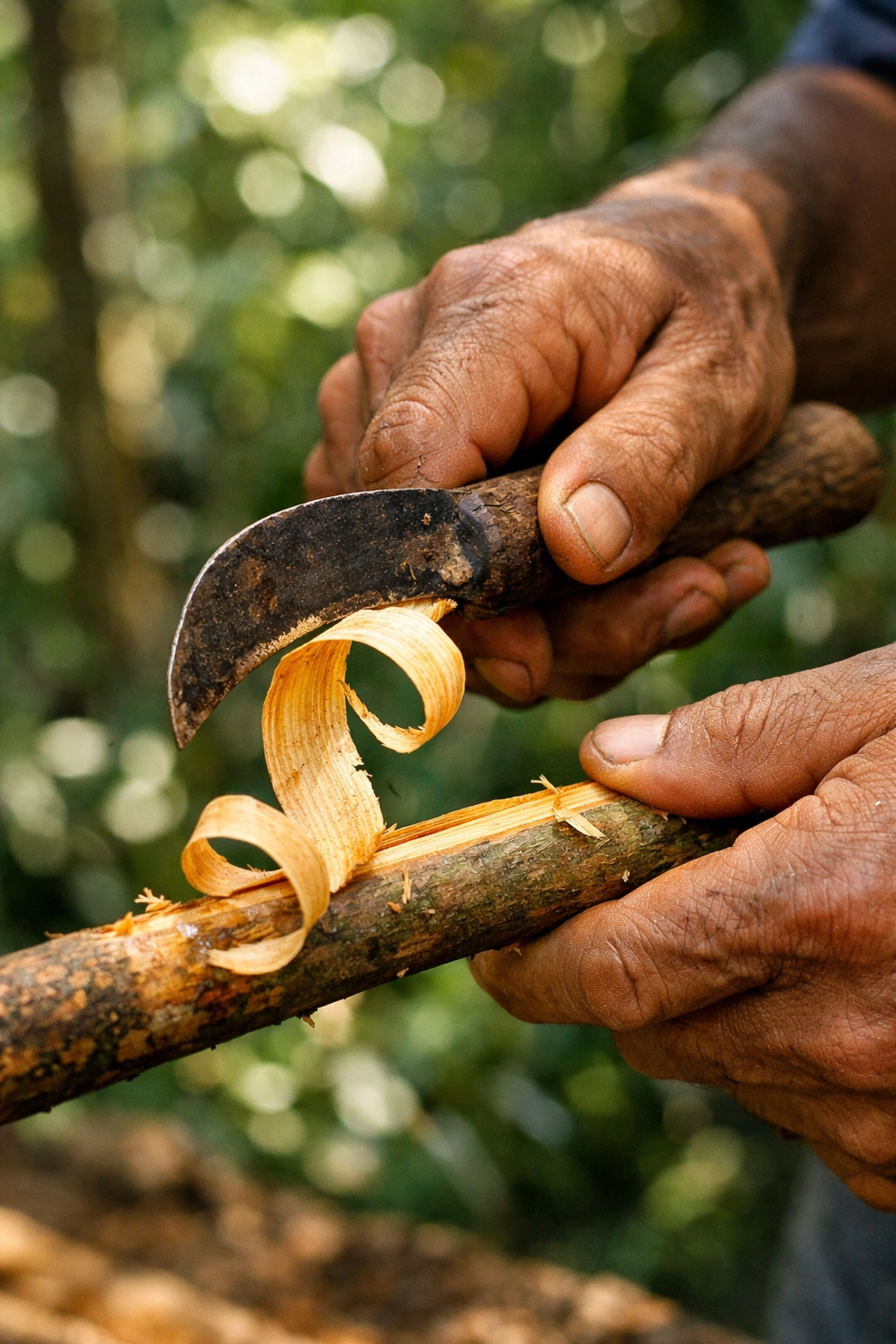
Producing H1 grade cinnamon is an art form. Farmers must carefully peel the inner bark of the cinnamon tree while the wood is still wet. These shavings are then laid out and rolled by hand into quills. As they dry in the tropical sun, they take on their characteristic tan color and brittle texture. It is a labor-intensive process that honors the heritage of the spice.
How to Spot the Real Deal at Home
Not sure what’s in your cupboard? Here is a quick guide to identifying H1 Grade Ceylon Cinnamon versus standard Cassia:
- The Layers: Look at the end of the quill. Ceylon cinnamon looks like a rolled cigar with many thin, delicate layers. Cassia is usually a single, thick piece of bark that curves inward from both sides.
- The Texture: You should be able to break a Ceylon quill easily with your fingers. Cassia is hard and woody; you’d likely need a hammer or a heavy-duty grinder to break it.
- The Color: Ceylon is a pale, tan brown. Cassia is a dark, reddish-brown.
- The Taste: Give it a nibble. If it’s sweet, delicate, and citrusy, it’s Ceylon. If it’s spicy, pungent, and leaves a “burn” on your tongue, it’s Cassia.
Elevating Your Kitchen with H1 Cinnamon
Because H1 Grade Ceylon Cinnamon is so delicate, it behaves differently in the kitchen than the “store-bought” powder you might be used to.
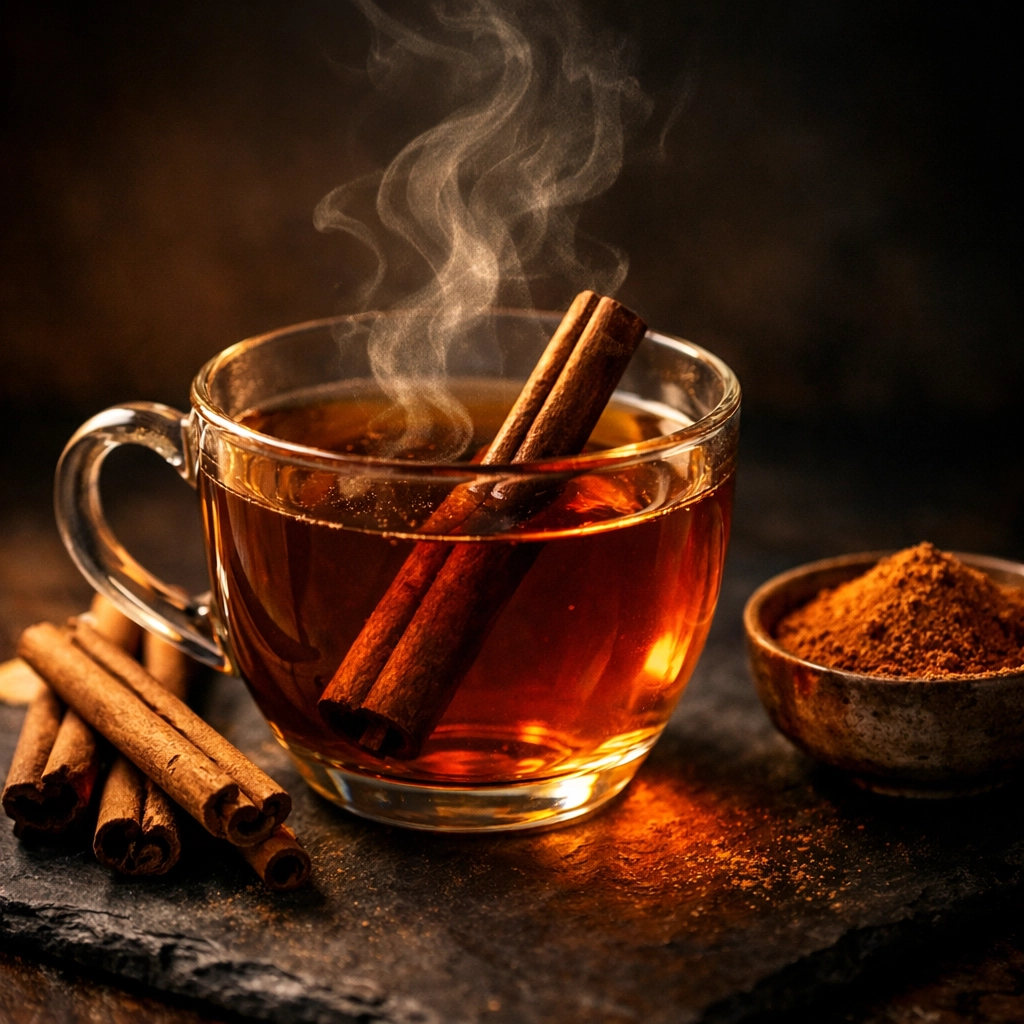
- For Tea and Coffee: Drop a small piece of an H1 quill into your morning brew. The heat will release the subtle sweetness without overpowering the beverage.
- For Baking: Use a microplane or spice grinder to create fresh powder just before you need it. The difference in a cinnamon roll or a Dutch apple pie is transformative.
- For Savory Dishes: Ceylon cinnamon is the secret ingredient in authentic Middle Eastern and South Asian savory dishes. Its citrus notes pair beautifully with lamb, stews, and rice pilafs.
Why the Investment Matters
Yes, H1 Grade Ceylon cinnamon costs more than the generic Cassia you find in bulk bins. But when you consider the purity, the significantly lower coumarin content, and the superior flavor profile, the value becomes clear.
By choosing Thottam Farm Fresh, you aren’t just buying a spice; you are supporting a transparent supply chain that values quality over quantity. You are choosing a product that is free from additives, fillers, and the “unknowns” of mass-market spice processing.
Are you ready to experience the “True” nature of cinnamon? You can find our premium H1 Grade Ceylon Cinnamon and other farm-fresh essentials in our online shop.
Switching to Ceylon is a small change in your kitchen, but for your health and your palate, it’s a giant leap forward. Treat your senses to the delicate warmth of the real thing: your body will thank you.
Want to learn more about the spices in your pantry? Explore our blog for more guides on sourcing, health benefits, and culinary tips.