You’ve likely heard it called "Red Gold," and for good reason. Saffron is, pound for pound, the most expensive spice on the planet. But if you’ve ever stood in a spice market or scrolled through a dozen tabs trying to buy spices online, you’ve probably felt that nagging doubt: Is this the real deal?
At Thottam Farm Fresh, we believe that luxury isn't just about the price tag; it’s about the purity, the heritage, and the soul of the product. When it comes to Kashmiri Saffron (Kesar), the stakes are high because the market is flooded with "imposters": everything from dyed corn silk to low-grade strands treated with chemicals to mimic the real thing.
In this masterclass, I’m going to walk you through why Kashmiri saffron is the undisputed heavyweight champion of the spice world, how to spot a fake in under 60 seconds, and why the "Pampore touch" makes all the difference.
Why Kashmir? The Magic of the Pampore Terroir
Saffron grows in several parts of the world, most notably Iran, Spain, and Greece. However, any connoisseur will tell you that Kashmiri saffron is in a league of its own. The reason lies in the "terroir": a French term usually reserved for wine, but perfectly applicable here.
Most of our saffron comes from the Pampore region, situated at an elevation of about 1,600 meters. The unique combination of cold Himalayan winters, well-drained loamy soil, and a specific artisanal harvest method creates a chemical profile that other regions simply cannot replicate.
While Iranian saffron is excellent and accounts for a large portion of global production, Kashmiri saffron (specifically the Mongra grade) contains higher levels of Crocin. Crocin is the compound responsible for that rich, golden-yellow hue. While most varieties hover around 5-7% crocin, authentic Kashmiri Mongra often tests between 8% and 10%. This means you need far fewer strands to achieve a more vibrant color and a deeper, more complex flavor.
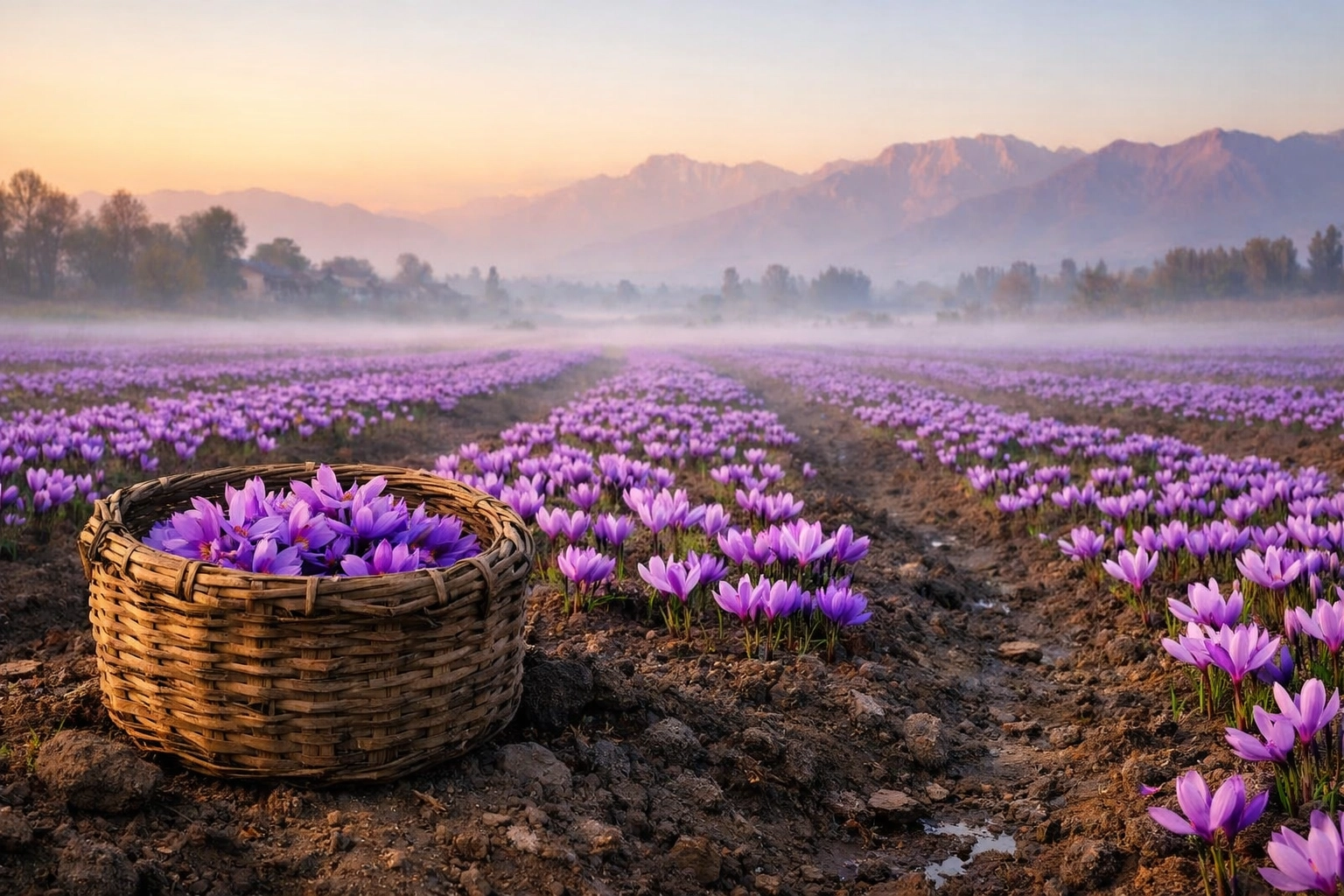
Visual: A panoramic view of the purple saffron fields in Pampore, Kashmir, during the autumn harvest.
The Artisanal Harvest: A Labor of Love
To understand the price, you have to understand the process. Each saffron flower (Crocus sativus) produces only three delicate red stigmas. These flowers bloom for only a few weeks in late autumn and must be hand-picked at dawn before the sun gets too high and wilts the petals.
Once picked, the stigmas are separated by hand. In Kashmir, the "Mongra" grade refers to the topmost part of the stigma: the deepest red portion that contains the highest concentration of essential oils and pigments. There is no yellow or white "style" (the stem of the flower) attached to true Mongra. This meticulous, back-breaking work is why, when you buy spices online from a trusted source, you aren't just buying a seasoning; you’re buying thousands of hours of human labor.
The Masterclass: How to Spot a Fake
Because saffron is so valuable, adulteration is rampant. Unscrupulous sellers often use "fillers" like safflower petals, shredded corn silk, or even dyed coconut fibers. To ensure you are getting the real Kashmiri saffron kesar, you need to use your senses.
1. The Visual Test
Real Kashmiri saffron threads are a deep, dark crimson. They shouldn't look "bright" or "neon" red: that’s usually a sign of artificial dye. Look for the shape: the strands should be 2-4 centimeters long and should have a distinctive trumpet-shaped tip. If the strands are perfectly uniform in width from top to bottom, they might be synthetic.
2. The Smell and Taste Paradox
This is the most common mistake buyers make. Real saffron smells sweet but tastes bitter.
- The Aroma: It should have a complex, heady scent: think of a mix of honey, hay, and a hint of metallic musk.
- The Taste: If you put a strand on your tongue and it tastes sweet, it has been adulterated with sugar or honey to add weight. Pure saffron has a distinct, slightly medicinal bitterness.
3. The Water Test (The Ultimate "Tell")
This is the gold standard of testing. Take 2-3 strands and drop them into a small bowl of warm water or milk.
- The Real Deal: Authentic saffron will release a golden-yellow hue slowly. It might take 10 to 15 minutes for the water to turn a deep yellow. Crucially, the threads themselves will stay red.
- The Fake: If the water turns deep red or orange immediately, it’s dyed. Furthermore, if the threads themselves lose their color and turn white or translucent, you’ve definitely bought a fake.
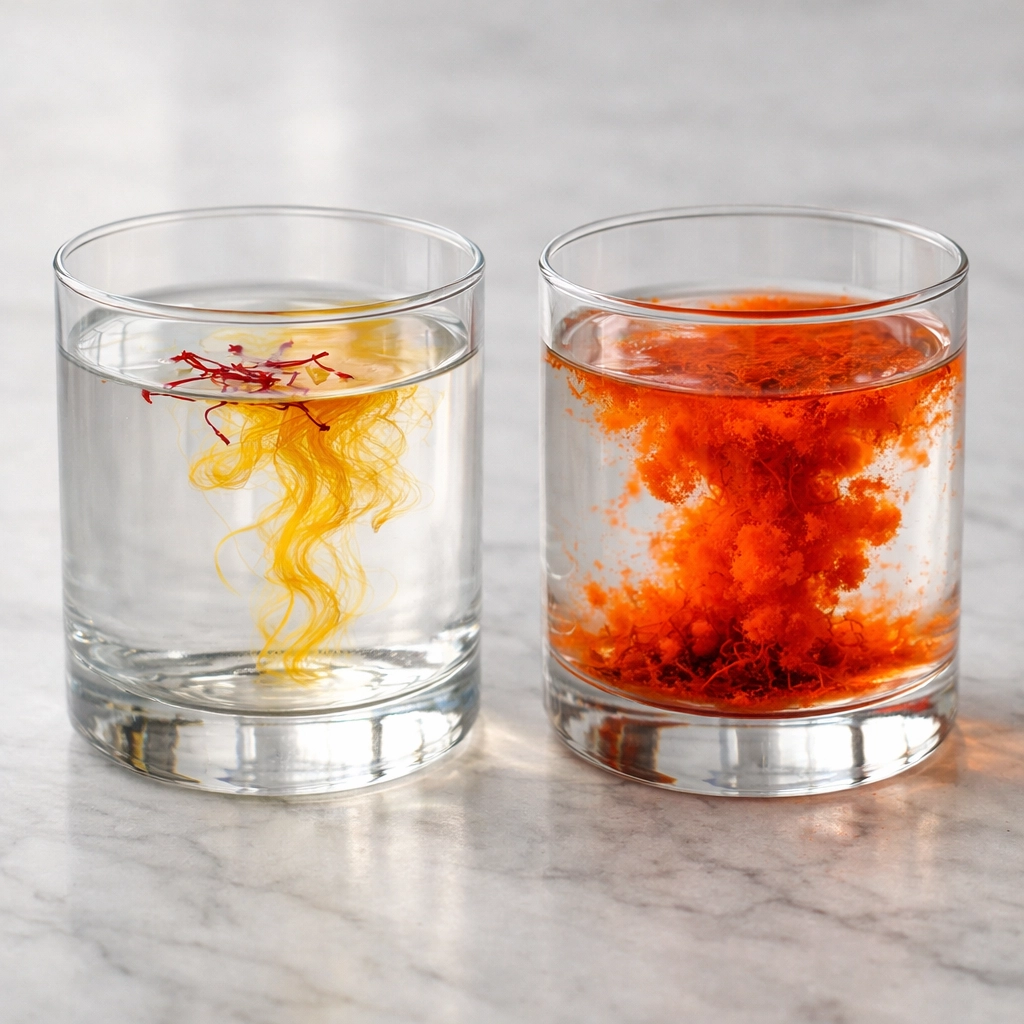
Visual: Two glasses of water side-by-side; one showing the slow, golden bloom of real saffron, the other showing the harsh, instant red of a counterfeit.
The Health Powerhouse: Beyond the Flavor
We often talk about saffron in the context of Biryani or Kheer, but its medicinal history is just as rich. Saffron is packed with antioxidants like Crocin, Crocetin, and Safranal. These compounds are known to help:
- Improve Mood: Often called the "sunshine spice," saffron has been shown in studies to help with mild to moderate depression and anxiety.
- Heart Health: The antioxidants help reduce inflammation and prevent the oxidation of cholesterol.
- Skin Radiance: Its anti-bacterial and anti-inflammatory properties make it a staple in food and health routines for glowing skin.
For those looking to integrate saffron into a holistic wellness routine, we highly recommend pairing it with other natural powerhouses. For instance, a glass of warm milk with a few strands of saffron and a teaspoon of our wild honey is a traditional remedy for a restful night’s sleep.
Premium Pairings: Creating a Luxury Experience
Saffron doesn't like to work alone; it thrives when paired with high-quality ingredients that complement its floral notes. If you are looking to create a premium gift or a high-end pantry, consider these pairings:
- Saffron & Honey: Infusing our wild honey with a few strands of saffron creates a syrup that is divine over pancakes or stirred into tea.
- The Royal Nut Mix: For a truly decadent snack, toss our cashew nuts and walnuts in a light saffron-infused butter. The earthiness of the nuts balances the floral height of the saffron perfectly.
- Dates & Saffron: One of the most classic Middle Eastern treats involves stuffing Mabroom dates or Medjoul dates with a sliver of almond and a single thread of saffron. It is the height of elegance.
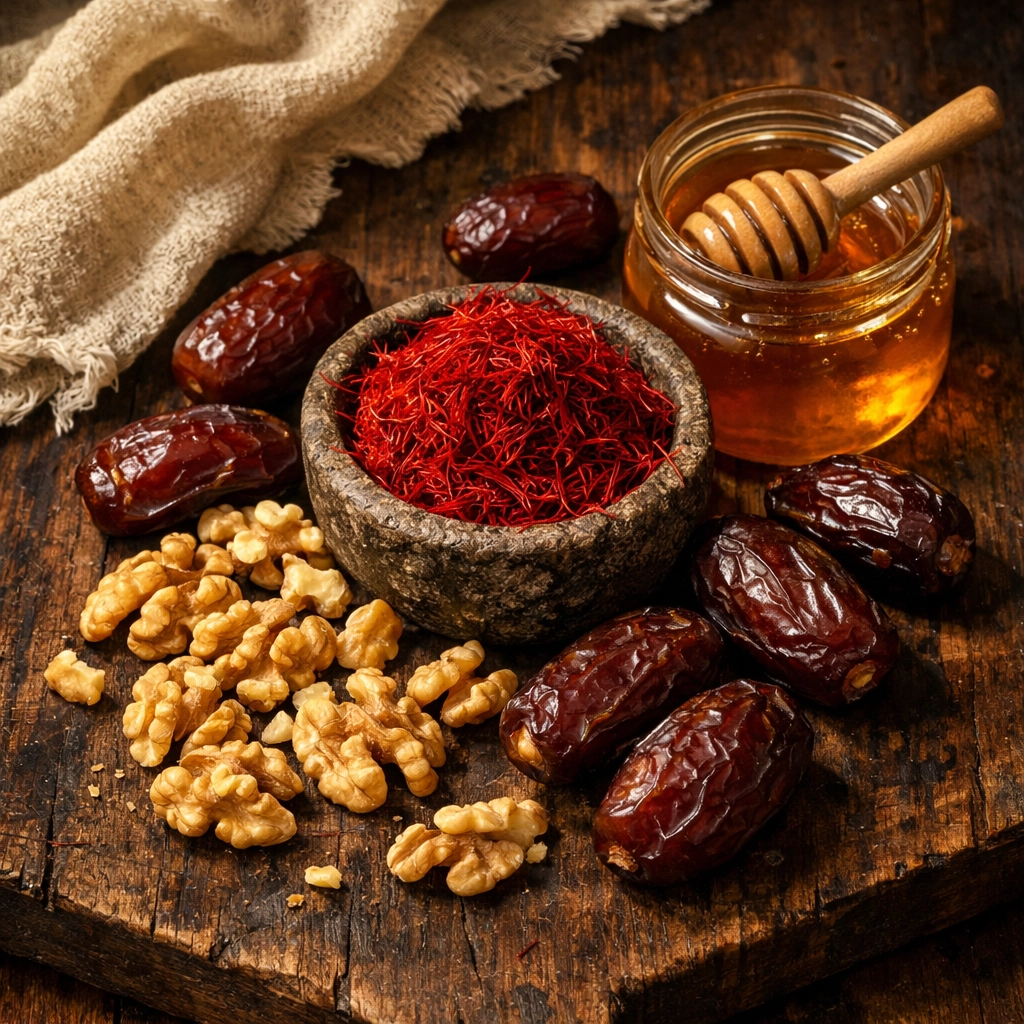
Visual: A rustic wooden board featuring a bowl of deep red saffron, a jar of golden honey, and a scattering of premium walnuts and dates.
How to Store Your "Red Gold"
You’ve done the research, you’ve passed the water test, and you finally have a jar of authentic Kashmiri Mongra. Don't let it go to waste!
Saffron is sensitive to light and moisture. Always store it in a cool, dark place in an airtight glass container. Avoid plastic, as it can absorb the delicate aroma of the spice. When you’re ready to use it, don’t just throw the dry strands into your pot. To get the most out of your investment, "bloom" the saffron first. Grind a few strands with a mortar and pestle (a tiny pinch of sugar can act as an abrasive) and soak the powder in two tablespoons of warm water for 20 minutes before adding it to your dish.
Why Choose Thottam Farm Fresh?
When you buy Kashmiri saffron kesar online from us, you aren't just getting a product; you’re getting a guarantee. We source directly from the farmers in Pampore, ensuring that the spice never sits in a humid warehouse for months losing its potency. We prioritize the "Mongra" grade because we believe our customers deserve the highest crocin content available.
Whether you're using it to elevate a Sunday lunch or adding it to your skincare regime, our saffron represents the very best of Indian agriculture. It is a taste of history, a dash of health, and a whole lot of heart.
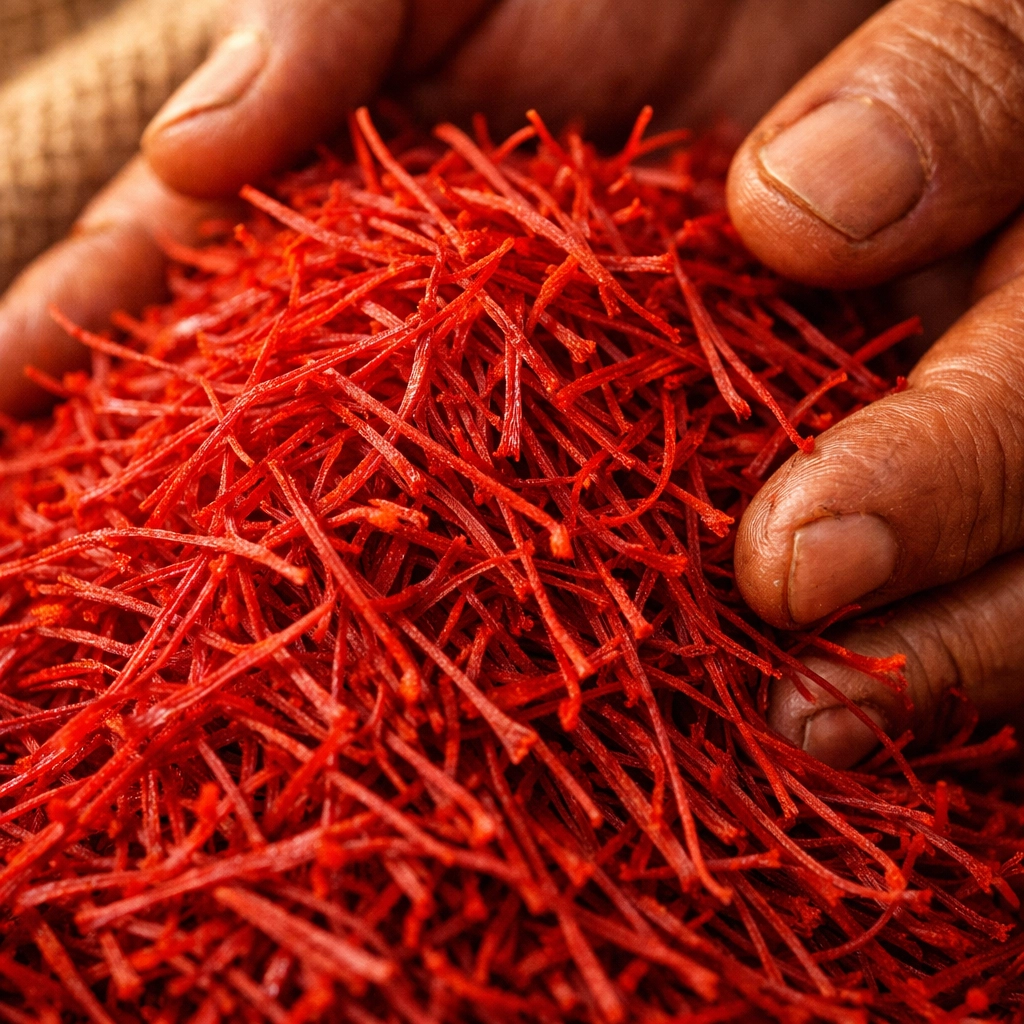
Visual: A close-up of a glass jar of Thottam Farm Fresh Kashmiri Saffron, showing the vibrant, long, crimson threads.
Ready to experience the world's most precious spice? Browse our product sitemap to find our latest harvest of Kashmiri Saffron and other premium spices. From our farm to your kitchen, we bring you nothing but the truth.