If you were to open your spice cabinet right now and smell your cinnamon, what would you find? For most of us, that woody, pungent aroma is synonymous with autumn baking and cozy lattes. But here is a secret that the spice industry doesn’t often advertise: the "cinnamon" in your pantry is likely not cinnamon at all.
In the world of specialty spices, there is a massive distinction between the common Cassia bark found in supermarkets and the delicate, medicinal Cinnamomum verum: famously known as "True Cinnamon" or Ceylon Cinnamon.
At Thottam Farm Fresh, we don’t just source spices; we curate experiences that prioritize your well-being. That is why we are diving deep into the Ceylon Cinnamon Masterclass. Today, we’re looking at why the H1 Grade is the gold standard for health-conscious kitchens and how you can ensure you are getting the real deal.
The Great Cinnamon Deception: Ceylon vs. Cassia
Most of what is sold as cinnamon tea online in India or in bulk spice markets is actually Cassia. While Cassia belongs to the same family, it is a thicker, harder bark with a much more aggressive, spicy flavor.
Ceylon cinnamon, on the other hand, comes almost exclusively from Sri Lanka. It is prized for its subtle, citrusy notes and its complex, sweet aroma. But the difference isn't just about taste: it’s about safety.
The Coumarin Concern
For the health-conscious reader, this is the most critical takeaway. All cinnamon contains a natural compound called Coumarin. In small doses, it is harmless. However, in high concentrations, Coumarin can be toxic to the liver and kidneys.
- Cassia Cinnamon: Contains high levels of Coumarin (about 1%). Frequent consumption can easily exceed the Daily Tolerable Intake.
- Ceylon Cinnamon: Contains only trace amounts of Coumarin (about 0.004%).
This is why, if you are taking cinnamon daily for blood sugar management or heart health, you must ensure you buy Ceylon cinnamon online in India rather than generic store-bought powder.
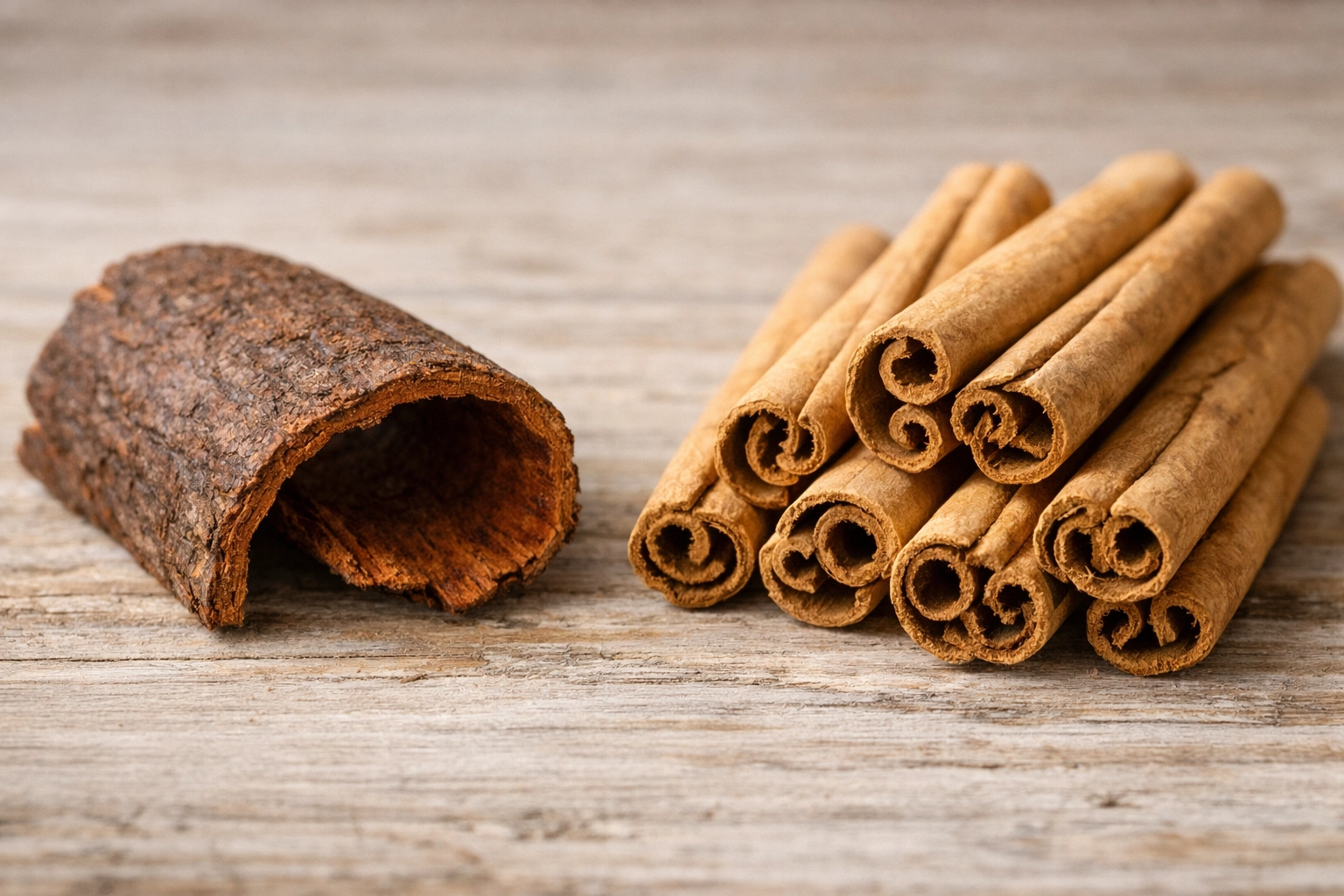
Visual: A side-by-side comparison on a rustic wooden table. On one side, thick, dark, single-layered Cassia bark. On the other, the multi-layered, thin, cigar-like quills of Ceylon cinnamon, showing the delicate "True Cinnamon" structure.
Decoding the Grades: Why H1 Stands Out
In Sri Lanka, the grading of cinnamon is an art form. It isn’t just about size; it’s about the craftsmanship of the "peeler." The bark is harvested and peeled by hand using traditional tools, then rolled into "quills."
The grading system usually ranges from Alba (the thinnest and most expensive) to Continental, Mexican, and Hamburg (H) grades.
H1 Grade Ceylon Cinnamon is the "sweet spot" for connoisseurs. The "H" stands for Hamburg, historically indicating the grade preferred by the European market. H1 quills have a diameter of about 16mm. They are composed of several thin layers of inner bark rolled together like a fine cigar.
When you buy H1 grade Ceylon cinnamon online from Thottam Farm Fresh, you are getting a product that strikes the perfect balance between oil content, aroma, and structural integrity. It isn’t as fragile as the ultra-thin Alba grade, making it perfect for infusing into stews or grinding fresh at home, yet it retains that signature "True Cinnamon" sweetness that lower "M" (Mexican) grades lack.
The Guarantee: Certificate of Origin
The global demand for Ceylon cinnamon has led to an influx of "blends" or mislabeled products. How do you know yours is authentic?
At Thottam Farm Fresh, our H1 Grade Ceylon Cinnamon comes with a Certificate of Origin from Sri Lanka. This document is the birth certificate of your spice. It guarantees that the bark was grown, harvested, and processed in the unique soil and climate of Sri Lanka, which is the only place on earth that produces the specific chemical profile of "True Cinnamon."
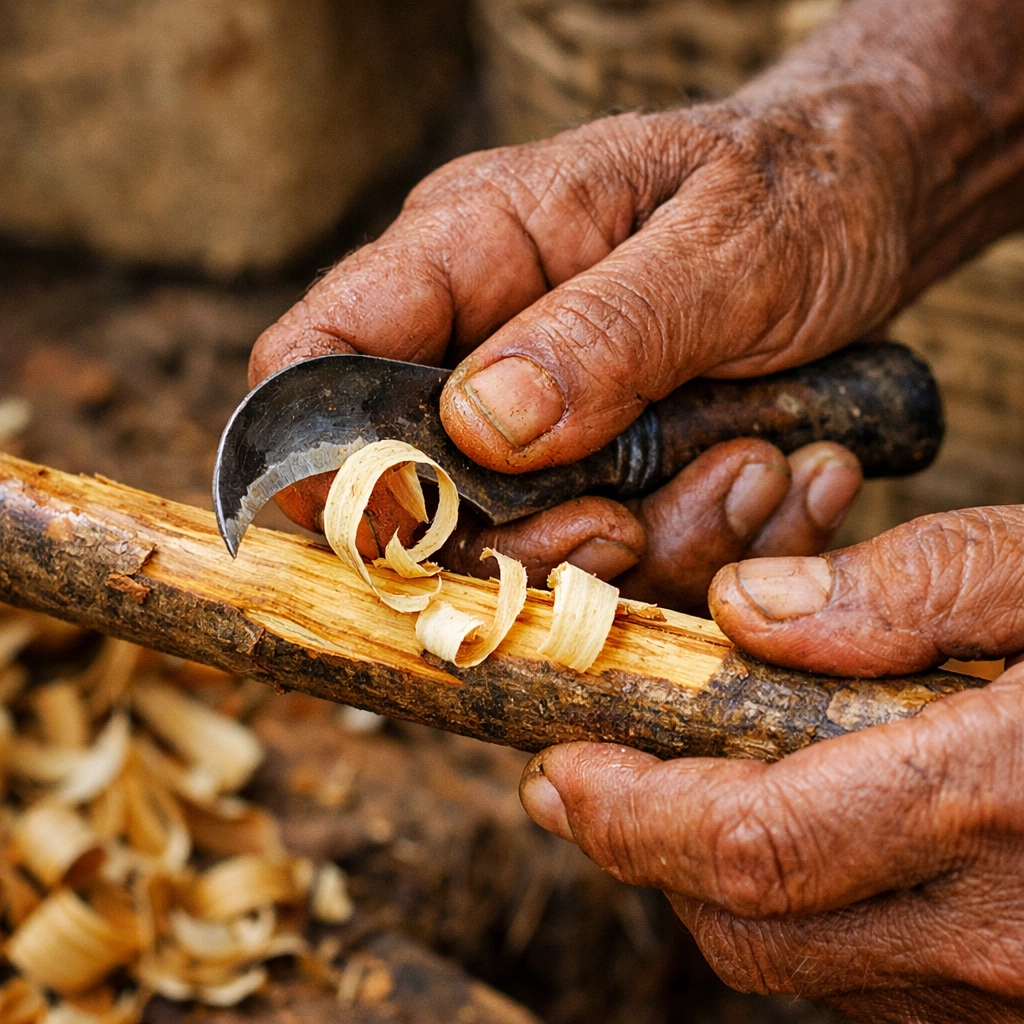
Visual: A close-up, high-textured shot of a spice worker’s hands manually peeling the cinnamon bark using a small, curved knife. The lighting is warm and natural, highlighting the thin, parchment-like layers of the inner bark.
Culinary Applications: A Subtle Powerhouse
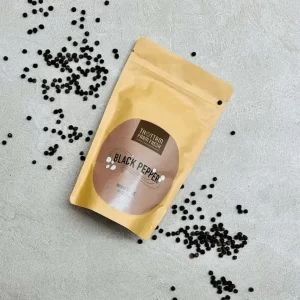
Because Ceylon cinnamon is less "spicy" than Cassia, it doesn't overpower other ingredients. It acts more like a flavor enhancer, much like how Tellicherry Black Pepper enhances the savory notes of a dish.
- The Perfect Brew: Add a small piece of an H1 quill to your morning tea. Unlike Cassia, which can leave a slimy residue due to high mucilage content, Ceylon dissolves cleanly and adds a floral sweetness. It is a vital component in an authentic Masala Tea.
- Desserts & Fruits: Sprinkle freshly ground H1 cinnamon over sliced apples, yogurt, or oats. Its natural sweetness means you can often reduce the amount of added sugar in your recipes.
- Savory Balance: In Middle Eastern and South Asian cooking, a stick of H1 cinnamon added to a pilaf or curry provides a woody depth that balances heat.
The Health Benefits: More Than Just a Flavor
In our Food & Health stories, we often talk about the synergy of spices. Just as turmeric is best absorbed with black pepper, Ceylon cinnamon works wonders when integrated into a holistic diet.
- Blood Sugar Regulation: Studies suggest that Ceylon cinnamon can improve insulin sensitivity, making it a favorite for those managing Type 2 diabetes.
- Antioxidant Powerhouse: It is loaded with polyphenols, which protect the body from oxidative damage.
- Anti-Inflammatory Properties: Like dried ginger, cinnamon helps reduce systemic inflammation, which is the root of many chronic illnesses.

Visual: A rustic kitchen scene featuring a warm cup of cinnamon-infused tea. A whole H1 quill rests on the saucer next to a small bowl of raw honey and a few scattered black peppercorns, emphasizing the health-focused "Masterclass" theme.
How to Identify Real H1 Ceylon Cinnamon at Home
If you've already made a purchase and want to test the quality, here is what to look for:
- The Quill Structure: Look at the end of the stick. Does it look like a solid piece of bark (Cassia) or like a rolled-up cigar with many thin layers (Ceylon)? H1 quills will have several distinct layers visible.
- The Texture: You should be able to break a Ceylon cinnamon quill with your hands easily. Cassia is often so hard it requires a hammer or a heavy-duty grinder to break.
- The Color: Ceylon is a pale tan or light brown. Cassia is typically a dark, reddish-brown.
- The Taste: Real H1 grade will be sweet and citrus-like on the tongue. It won't have that "burning" sensation associated with cheap cinnamon candies.
Why Quality Matters
When you choose to buy Ceylon cinnamon online in India, you aren't just buying a spice; you are investing in a tradition that spans centuries. The process of creating an H1 quill is labor-intensive and requires immense skill. By choosing Thottam Farm Fresh, you are supporting the farmers and peelers who keep this heritage alive, while ensuring your family isn't consuming the high coumarin levels found in industrial Cassia.
Whether you are using it for its medicinal properties or to elevate your morning porridge, the H1 Grade provides the purity and potency that "True Cinnamon" is famous for.
Ready to upgrade your spice cabinet? Explore our collection of authentic, farm-to-table spices and experience the difference that a Certificate of Origin makes.
Check out more of our spice stories and farm-to-table journeys here.
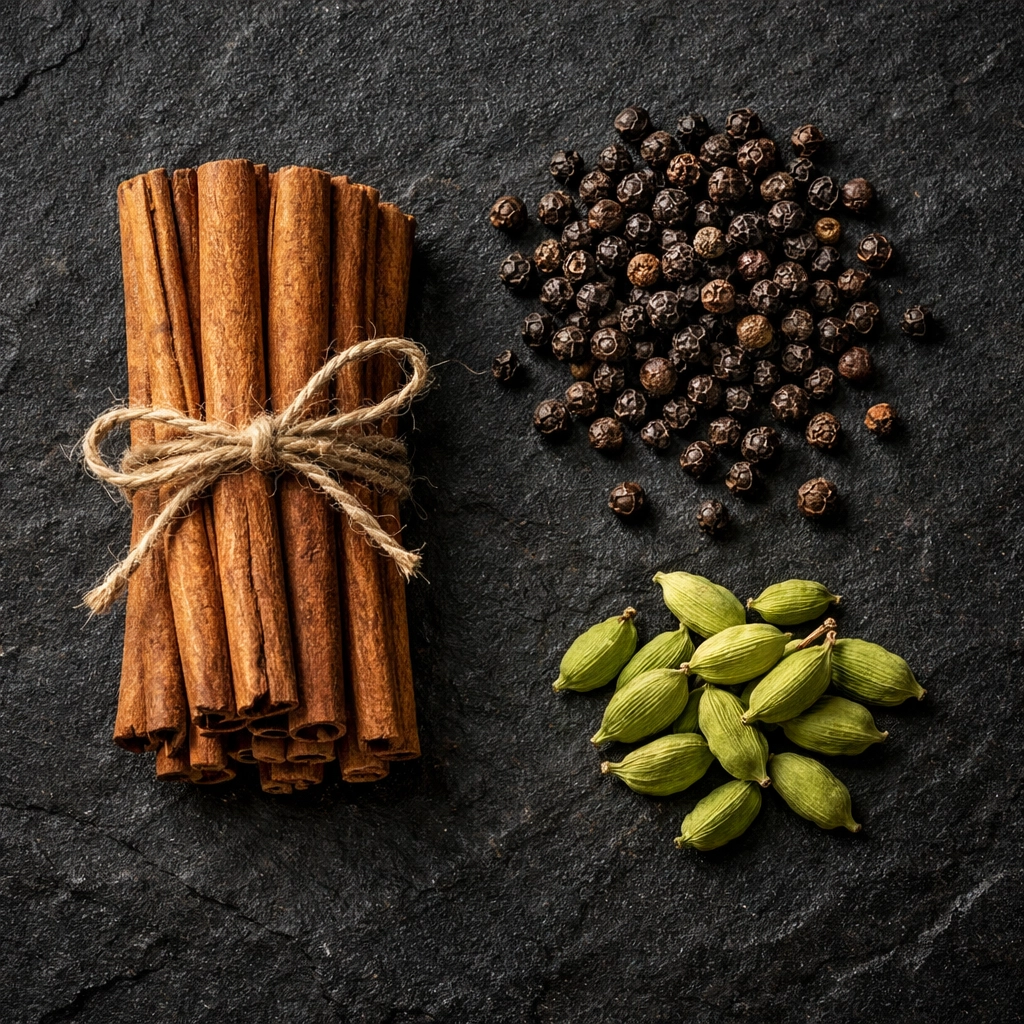
Visual: A flat lay of various spices on a dark stone surface: H1 cinnamon quills, Tellicherry black pepper, and green cardamom pods. The arrangement is artistic and textured, highlighting the premium, specialty nature of the products.