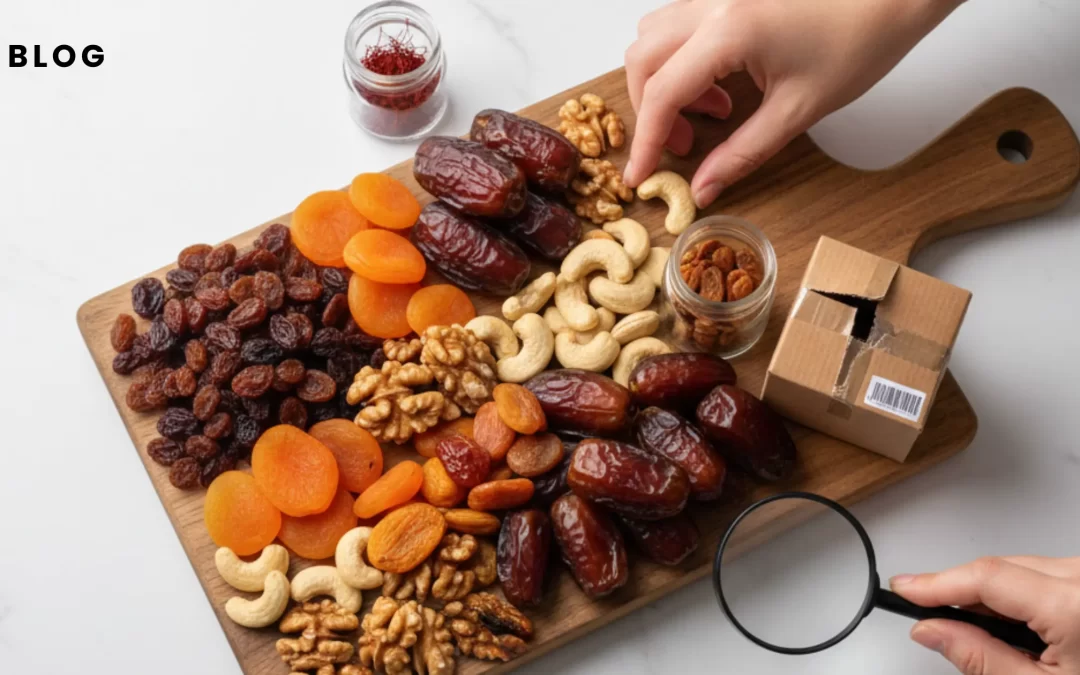
Buying dry fruits online feels convenient — until you realize not all that looks premium is actually premium.
From polished almonds coated with oil to glossy dates dipped in sugar syrup, the market is full of cleverly disguised low-grade products labeled as “premium.” When it comes to health, purity, and nutritional value, quality matters more than quantity.
So how do you choose authentic and premium dry fruits online?
This guide gives you 5 smart filters you should always check — so you never get cheated again.
🔗 Related Read: Why Premium Dry Fruits Are the Smartest Superfood Investment for Your Health
✅ 1. Check Grade Quality (Yes, Dry Fruits Have Grades!)
Most consumers don’t know this — but dry fruits, especially almonds and cashews, are graded based on:
- Size
- Color
- Moisture content
- Appearance
- Crack-free uniformity
Example:
- Almonds: grades like US Extra No.1, California Select
- Cashews: W320 / W240 / W180 (King Size) — Smaller the number, bigger the nut
➡️ Buy W180 or W240 cashews if you want true premium quality.
If the website doesn’t mention the grade, it usually means it’s a lower-grade product.
✅ 2. Avoid Glossy, Shiny Dry Fruits — They’re Usually Polished
Premium dry fruits should not look overly shiny, especially:
- Almonds
- Pistachios
- Cashews
A glossy appearance typically indicates:
- Oil polishing
- Artificial shine
- Heat treatment to improve appearance
Authentic premium dry fruits are matte and natural-looking, not Hollywood-glossy.
✅ 3. Check the Origin (Single Estate > Commodity Mix)
Where your dry fruits come from matters.
Example:
- Almonds from California
- Pistachios from Iran
- Cashews from Kerala
- Dates from UAE / Saudi Arabia
Brands that source directly from farms or estates offer:
- Freshness
- Traceability
- Better nutritional value
If a brand doesn’t mention the origin → Red flag.
✅ 4. Look for Processing Transparency (Sulphur-Free, No Added Sugar)
Always check these on the product page:
- ❌ No artificial colors
- ❌ No preservatives (E220 / Sulphites)
- ❌ No added sugar (especially in dates, cranberries, raisins)
- ✅ Naturally sun-dried or air-dried
- ✅ Packed in small batches
Especially with dates and raisins, many low-cost suppliers add sugar syrup to increase weight.
Tip for dates:
If dates are crystalized or feel sticky → they have added sugar.
✅ 5. Read Customer Reviews (Look for Photos)
Don’t rely on star ratings alone.
Browse through photo reviews and negative reviews.
Look for comments like:
- “Tastes fresh”
- “Crisp and crunchy”
- “No spoiled or small-sized nuts”
Avoid listings that have reviews complaining:
- “Too many broken pieces”
- “Bitter taste” (especially walnuts)
- “Powder settled at bottom” (indicates old stock)
Bonus: ✅ Comparison Checklist (Save this before buying)
| Parameter | Low-Grade Dry Fruits | Premium Dry Fruits |
| Appearance | Too shiny, artificially glossy | Matte natural finish |
| Taste | Bitter, oily, sometimes stale | Fresh, crisp, naturally sweet |
| Origin | Unknown / imported mix | Traceable and single-origin |
| Processing | Polished, sweetened, sulphur-coated | Natural, unpolished, chemical-free |
| Pricing | Suspiciously low | Fair premium for quality |
🛒 Should You Pay More for Premium Dry Fruits?
Absolutely — and here’s why:
Premium dry fruits are:
- Fresher
- More nutrient-dense
- Higher yield (less waste)
- Free from chemicals and additives
Cheap dry fruits are cheaper because they are:
- Old season stock
- Broken pieces
- Polished or processed artificially
If you’re investing in your health, not just a snack — choose premium.
🔗 Continue Reading :
Why Premium Dry Fruits Are the Smartest Superfood Investment for Your Health
✦ Final Takeaway
Choosing premium dry fruits online is easy when you know what to look for.
✅ Check grade
✅ Check origin
✅ Look for natural finish
✅ Read real customer reviews
Your body deserves the best — not the cheapest.