Have you ever looked at a jar of black pepper and thought it looked a little too perfect? You know the kind: jet-black, mirror-shiny, and looking like they belong in a high-gloss magazine ad rather than your kitchen. While we’ve been trained to think "shiny equals fresh," when it comes to the King of Spices, that glossy sheen is often a red flag.
In the world of spice trading, there is a common but deceptive practice called "oil-polishing." It’s a trick used to make low-quality or old pepper look premium. But at Thottam Farm Fresh, we believe that purity should never be sacrificed for aesthetics.
If you are looking to buy black pepper online, understanding why your pepper should be matte, not shiny, is the first step toward a healthier, more flavorful kitchen.
What Exactly is Oil-Polished Black Pepper?
To the untrained eye, oil-polished black pepper looks high-grade. It has a deep, uniform black color and a smooth, slippery surface. But how does it get that way?
Traders often take peppercorns that are dusty, graying, or underweight and coat them with mineral oils. These aren't high-quality cooking oils, either. Often, they use liquid paraffin or, in some extreme and illegal cases, even industrial-grade oils.
Why do they do it?
- To add weight: Spices are sold by weight. Adding a layer of oil increases the weight of each peppercorn, allowing sellers to charge more for less actual spice.
- To mask age: Naturally dried pepper eventually loses its jet-black color and turns a dark, dusty brown. Oil-polishing makes old pepper look brand new.
- To hide fungus: A coat of oil can sometimes act as a temporary sealant to hide mold or fungal growth on poorly dried spices.

The Hidden Dangers: Why Oil-Polishing is a Health Risk
When you buy black pepper online, you’re likely looking for its health benefits. Black pepper is a powerhouse of piperine, an alkaloid that helps with nutrient absorption (like the curcumin in turmeric) and aids digestion. However, oil-polishing introduces substances into your body that have no business being in your food.
1. Carcinogenic Risks
Many of the mineral oils used for polishing are not food-grade. Liquid paraffin and petroleum-based oils are considered carcinogenic when ingested over time. In India, the Prevention of Food Adulteration Act strictly prohibits the use of mineral oil on pepper because of these toxicity risks.
2. Loss of Natural Essential Oils
Black pepper naturally contains its own essential oils (like limonene and beta-caryophyllene). When pepper is "polished," the friction and the coating can actually trap or degrade these natural oils, stripping the spice of its therapeutic properties.
3. Chemical Residues
Because oil-polishing is often done in large, unregulated batches, there is a high risk of chemical cross-contamination. Instead of getting a pure gift from nature, you’re getting a chemically treated commodity.
Aroma vs. Appearance: The Flavor Sacrifice
Think about the last time you cracked fresh pepper over an egg or a bowl of soup. That immediate, sharp, woody aroma is what makes the spice legendary.
Oil-polished pepper is a sensory disappointment. The oil forms a barrier that dulls the natural aroma. Instead of that punchy, spicy scent, oil-polished pepper often has a faint, "off" smell: sometimes even a slight kerosene-like odor. When you grind it, the flavor is flat. You might get the heat, but you lose the complex floral and citrus notes that define high-quality Malabar pepper.

How to Spot the Difference: The Rub Test
How can you tell if the pepper you just bought is pure or polished? It’s easier than you think.
- The Look: Pure pepper is matte. It has a wrinkled, prune-like surface and varies in color from dark brown to black. If it looks like it was polished with a cloth, be suspicious.
- The Smell: Natural pepper smells clean and spicy. If you detect a hint of petroleum, diesel, or chemicals, discard it.
- The Rub Test: Take a few peppercorns and rub them between your palms or on a clean white paper. Pure pepper will leave a bit of dust or no residue at all. Oil-polished pepper will leave an oily, dark smear on the paper or your skin.
- The Water Test: Drop a few peppercorns into a glass of hot water. If an oily film starts to float on the surface, you’ve got polished pepper.
Why Thottam Farm Fresh Says No to the Shine
At Thottam Farm Fresh, we source our black pepper directly from our own farms and trusted partner farmers in the Malabar region. We believe that nature doesn't need a makeover.
Our pepper is:
- Sun-Dried Naturally: We allow the sun to do the work, preserving the natural piperine content and the rugged texture of the berry.
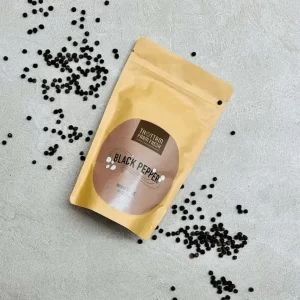
- Unpolished and Pure: We never use oils, paraffin, or additives. When you see our pepper, it’s matte, textured, and 100% natural.
- High Grade: We specialize in "Tellicherry Bold" grades: large, mature berries that have the highest concentration of flavor.
When you choose to buy spices online from us, you aren't just buying an ingredient; you’re supporting a farm-to-table process that respects the heritage of the spice trade.

The Verdict: Choose Purity Every Time
In a world of mass-produced foods, it’s easy to be swayed by what looks "premium." But in the spice world, beauty is truly skin deep. The real value of black pepper lies in its internal chemistry: its oils, its heat, and its health-giving properties.
Next time you're browsing for black pepper online, look past the shine. Choose the matte, the wrinkled, and the authentic. Your body and your taste buds will thank you.
Ready to experience the real taste of the Malabar coast? Explore our range of naturally dried, unpolished black pepper and bring the true essence of Kerala to your kitchen.