You’ve seen them in every supermarket aisle and festive gift hamper. They look perfectly uniform, suspiciously shiny, and often come at a price that seems a little too good to be true. But have you ever opened a bag of “premium” nuts only to find them tasting like cardboard, or worse, leaving a strange, waxy film on your tongue?
When it comes to dry fruits online, the difference between “commercial grade” and “premium grade” isn’t just about the price tag: it’s about your health, the flavor, and the integrity of the food you’re putting into your body.
At Thottam Farm Fresh, we believe that nature doesn’t need a makeover. Real nuts are beautifully imperfect. They have textures, natural oils, and deep, complex flavors that processed nuts just can’t match. In this masterclass, we’re going to pull back the curtain on the industry “tricks” used to make low-quality nuts look high-end and show you exactly how to spot the real deal when you buy almonds cashews walnuts online.
The Almond: Decoding the Prunus dulcis
The almond, or Prunus dulcis, has been a symbol of health and abundance for millennia. Native to the Middle East but now famous in varieties ranging from California’s massive orchards to the rugged terrains of Mamra and Gurbandi in India and Afghanistan, the almond is the undisputed king of the snack world.
But here is the problem: the commercial market loves “shiny.” To achieve that glossy, deep-brown look you see in mass-market packets, many processors use oil-polishing. They coat the almonds in a thin layer of cheap vegetable oil to hide the “dusty” appearance of older stock. Sometimes, they even use a light sugar-syrup coating to add weight and a false crunch.
How to Spot Premium Quality Almonds
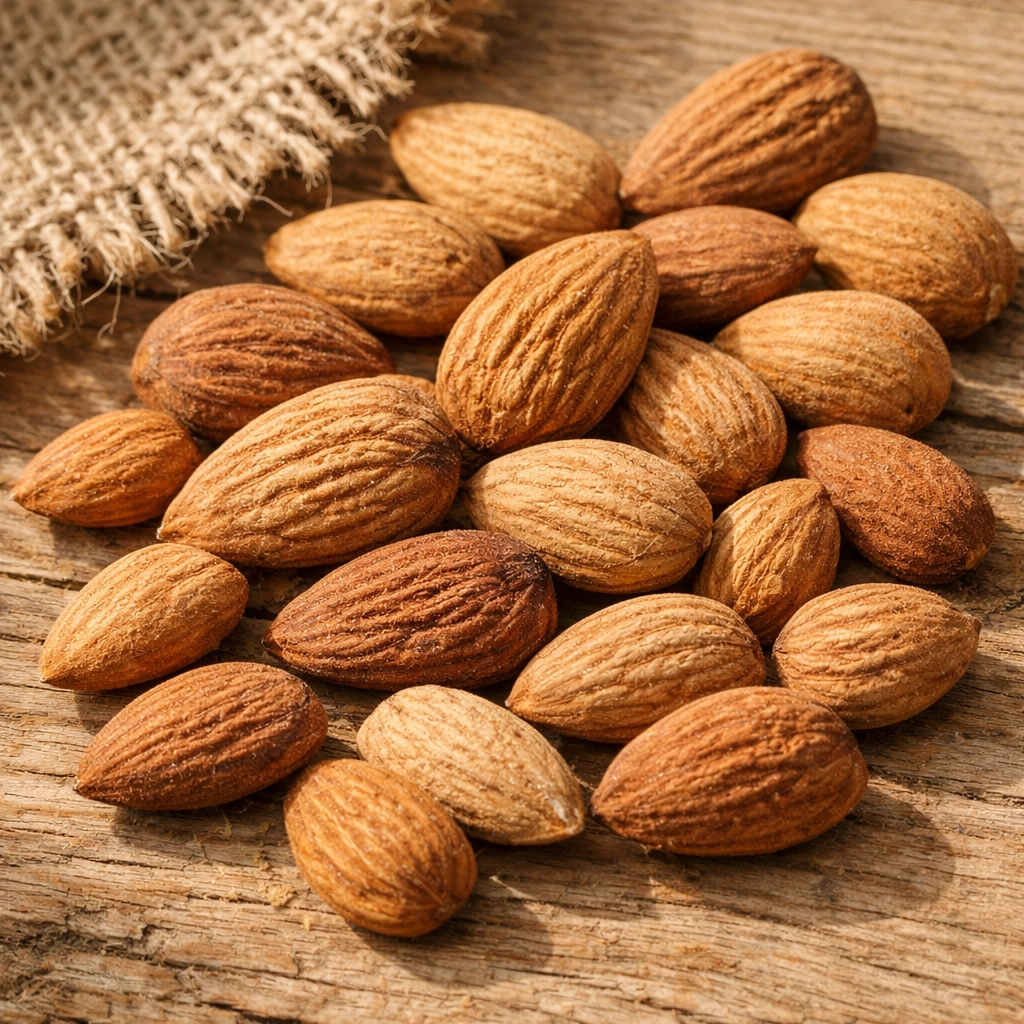
- The Matte Finish: Real, high-quality almonds should have a natural, matte finish. If they look oily or leave a residue on your fingers, they’ve likely been polished.
- The Skin Integrity: Look for almonds with intact skins. If the skin is peeling or “shredded,” it usually means the nut has been over-processed or stored in poor conditions.
- The Snap Test: A fresh almond should have a clean, audible “snap” when bitten or broken. If it’s rubbery or bendy, it’s past its prime.
- Uniformity vs. Heritage: While California almonds are prized for their uniform size (great for baking), heritage varieties like Gurbandi are smaller and often look “uglier” but contain significantly higher natural oil content and a more robust flavor.
Why They Matter for Your Health
Almonds are a powerhouse of Vitamin E and magnesium. They are essentially a “heart-health” pill in a shell, known for helping manage cholesterol levels. When you choose unpolished, raw almonds, you’re getting those antioxidants in their most potent form, without the inflammatory vegetable oils used in polishing.
The Cashew: The Creamy Truth of Anacardium occidentale
The cashew (Anacardium occidentale) is a bit of a botanical rebel. It grows on the outside of the “cashew apple,” and its processing is an art form in itself. Because cashews are naturally softer than other nuts, they are the most susceptible to “cheats” in the market.
Have you ever noticed that some cashews feel slightly sticky or have a yellowish tint? That is often the result of sugar-syrup dipping. Low-grade cashews are dipped in a light syrup to increase their weight (selling you sugar water for the price of nuts) and to give them a synthetic “crunch.”
The Grading Game
When looking for premium dry fruits online India, you’ll see codes like W180, W240, or W320.
- W180: The “King of Cashews.” These are massive, ivory-white, and incredibly creamy.
- W240 & W320: These are the standard high-quality sizes you’ll find for daily snacking.
How to Spot the Fakes
- Color: Premium cashews should be ivory or pale cream. If they are bright white (bleached) or yellowish (old or syrup-coated), steer clear.
- Shape: Look for “Wholes.” Broken pieces (splits or butts) lose their natural oils faster and are often used for lower-quality snacks.
- The “No-Stick” Rule: If the cashews stick together in the bag or feel tacky to the touch, they’ve been treated with syrup. A real cashew is smooth and dry.

For more details on the specific grades we source, check out our guide on how to buy cashew nuts online.
The Walnut: The Brain-Boosting Juglans regia
If any nut looks exactly like what it’s meant to heal, it’s the walnut. Its brain-like structure is a literal hint from nature about its high Omega-3 fatty acid content, essential for cognitive function.
However, walnuts are also the most delicate. Because they are so high in healthy fats, they can go rancid very quickly if not stored or sourced correctly. Many commercial sellers try to mask this by over-drying them or selling “English” (Persian) walnuts that have been sitting in warehouses for over a year.
The Freshness Test
- The Smell: This is your best tool. A premium walnut should smell mildly earthy and sweet. If it smells like paint thinner or old oil, it is rancid. Consuming rancid oils causes inflammation: the exact opposite of why you’re eating walnuts!
- The Color of the Kernel: Look for “Extra Light” or “Light” kernels. As walnuts age or are exposed to heat, the skin darkens to a deep, bitter brown. The lighter the kernel, the milder and creamier the taste.
- The “Plump” Factor: High-quality walnuts should look plump and fill their shell (if buying in-shell). If the kernel is shriveled and rattles around, it has lost its moisture and nutrients.

You can learn more about the specific health benefits of walnuts and why we prioritize sourcing the freshest crop each season.
Why Sourcing Matters: The Thottam Philosophy
When you search for nuts online India, you’re bombarded with options. So why choose us?
The “Thottam way” is about transparency. We don’t believe in oil-polishing our almonds to make them look like furniture. We don’t believe in soaking our cashews in syrup to tip the scales. We believe that when you buy a nut, you should taste the soil it grew in and the sun that ripened it.
Our nuts are sourced directly from growers who respect the land. Whether it’s the premium cashews from the coastal belts or the high-grade almonds and walnuts from the best orchards, we ensure they move from the farm to your doorstep in the shortest time possible.

Quick Quality Checklist for Your Next Purchase:
- Aroma: Does it smell like a nut, or does it smell like nothing? Real nuts have a distinct, pleasant fragrance.
- Texture: Is it firm? Softness is a sign of moisture ingress and impending mold.
- Ingredients: Check the back. It should say “Almonds” or “Cashews.” If it says “Vegetable oil,” “Sugar,” or “Preservatives,” you’re not buying a health food; you’re buying a processed snack.
Conclusion: Investing in Your Wellness
Choosing premium dry fruits is an investment in your long-term health. Whether you’re adding them to your morning oatmeal, using them to power through a healthy summer, or gifting them to loved ones, the quality matters.
Don’t settle for the polished, syrup-coated imitations found on most supermarket shelves. Look for the matte textures, the ivory hues, and the earthy aromas of truly natural produce. Your brain, your heart, and your taste buds will thank you.
Ready to taste the difference? Explore our curated collection of premium dry fruits and experience what real, farm-fresh quality feels like.