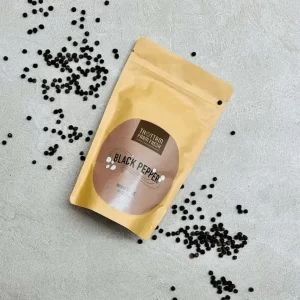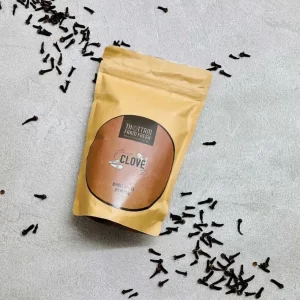
Have you ever stood over a bubbling pot of curry, reached for your jar of ground cumin, and realized it smelled more like… well, nothing? It’s a heartbreak every home cook knows. You’ve sourced the best ingredients, prepped your vegetables with care, but the “soul” of the dish: the spices: just isn’t showing up to work.
At Thottam Farm Fresh, we take immense pride in sourcing the highest quality, farm-direct Kerala spices online. But here’s the honest truth: even the world’s most potent Tellicherry Black Pepper or the most fragrant Cardamom can lose its “oomph” if it isn’t treated with respect once it hits your kitchen.
Spices are essentially tiny biological capsules filled with volatile oils. These oils are where the flavor, the aroma, and the health benefits live. If those oils evaporate or oxidize, you’re left with colorful dust.
If you’re looking to preserve spices and ensure every pinch packs a punch, this is your definitive guide to master spice storage.
The Four Enemies of Flavor
To keep your spices fresh, you have to play defense. There are four primary “enemies” that are constantly trying to rob your spices of their character.
1. Heat: The Silent Killer
Most of us store our spices in a beautiful rack right above the stove. It makes sense, right? You’re cooking, you reach out, and there they are. Unfortunately, this is the worst possible place for them. Constant heat from the stovetop or oven causes the essential oils in the spices to dry up much faster. If your spice jars feel warm to the touch, they are losing flavor every second.
2. Light: The Fader
Direct sunlight or even strong kitchen lights can trigger a process called photodegradation. This breaks down the chemical compounds in the spices, leading to dull colors and muted flavors. Have you ever seen a jar of paprika that turned a sad, sandy brown? That’s light damage.
3. Moisture: The Clumper
Humidity is the enemy of any spice powder online. When moisture gets into a jar, it leads to clumping, caking, and in the worst-case scenarios, mold. This is also why you should never shake a spice jar directly over a steaming pot: the rising steam goes straight into the jar!
4. Air: The Oxidizer
Oxygen causes the oils in spices to oxidize and turn rancid or simply evaporate. An unsealed bag is a death sentence for flavor.
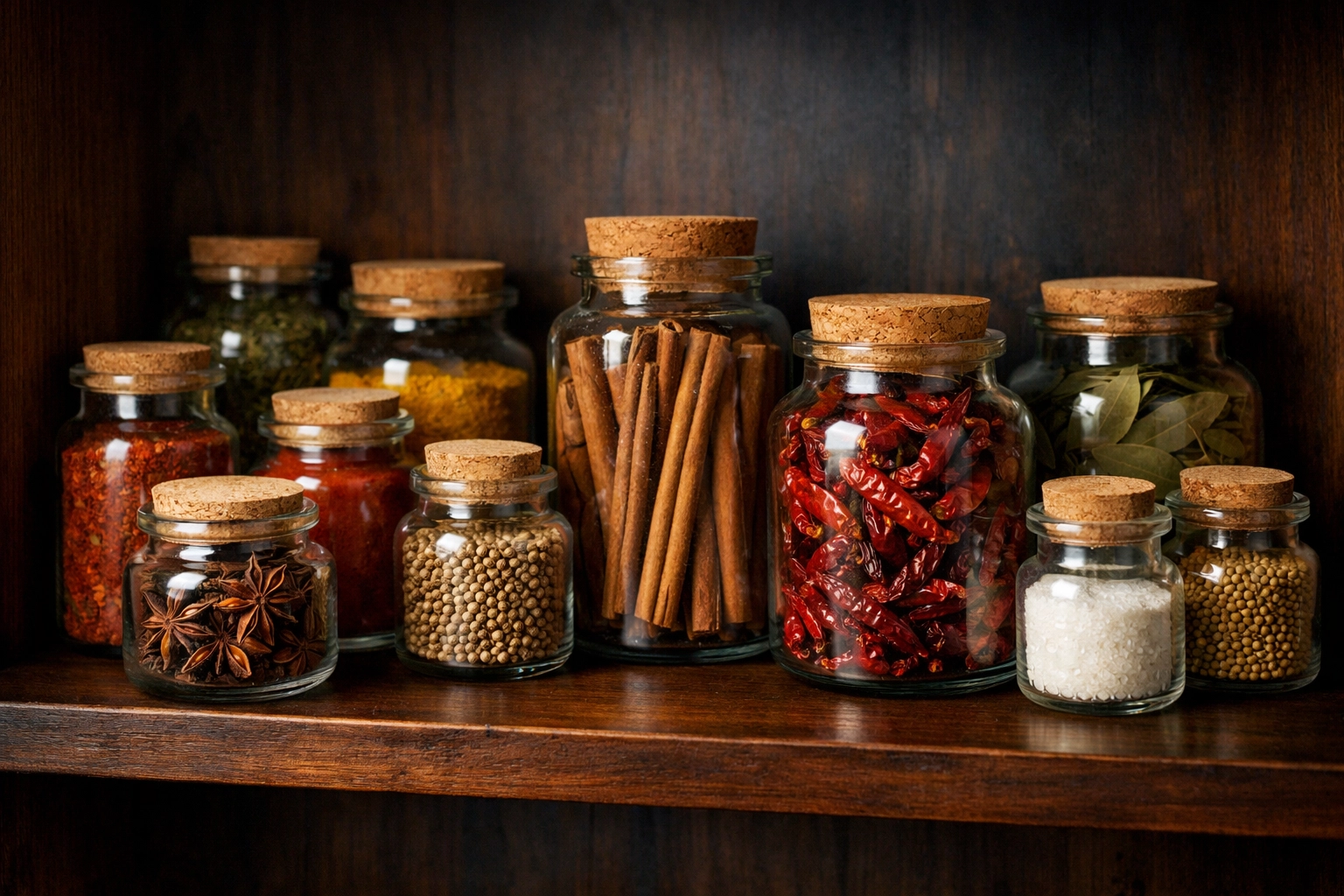
Caption: A beautifully organized, cool, and dark pantry is the secret to spice longevity.
The “Where” and “How”: Selecting the Perfect Spot
The golden rule for spice storage is simple: Keep them in a cool, dark, and dry place.
Ideally, this means a kitchen cabinet that is far away from the stove, the dishwasher (which emits a lot of heat and steam), and the refrigerator. A pantry or a dedicated spice drawer is usually your best bet.
When you buy spices online, they often arrive in high-quality packaging. At Thottam Farm Fresh, we are deeply committed to quality packaging. We use glass jars and resealable, multi-layer pouches because we know that plastic can be porous and react with the potent oils in premium spices.
Why Glass is King
If you are transferring your spices into your own containers, always choose glass.
- Non-porous: Unlike plastic, glass won’t absorb the smells of the spices stored inside.
- Airtight seals: Glass jars with gaskets or tight-fitting screw tops provide the best barrier against oxygen.
- Eco-friendly: It aligns with a sustainable kitchen lifestyle: something we hold dear at Thottam.
Whole Spices vs. Ground Spices: The Longevity Gap
If you want to maximize the shelf life of your pantry, the secret is to buy whole spices whenever possible.
Think of a whole spice: like a Tellicherry Black Pepper corn or a whole Nutmeg: as a natural vault. The outer shell protects the aromatic oils inside. Once you grind a spice, the surface area increases exponentially, exposing all those oils to the air.
- Whole Spices: Can stay vibrant for 3 to 4 years if stored correctly.
- Ground Spices: Generally start to lose their peak potency after 6 to 12 months.
- Dried Herbs: These are the most delicate and usually last about 1 to 2 years.
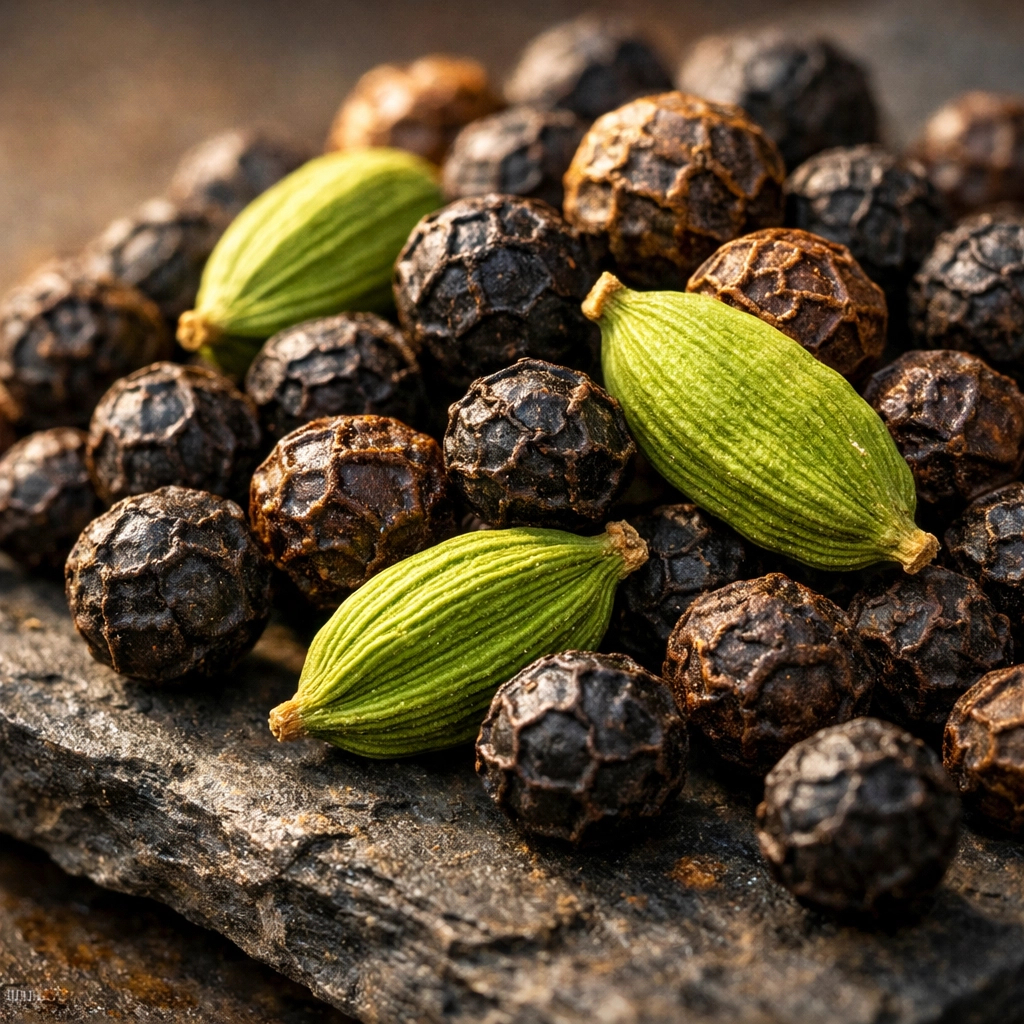
Caption: Whole spices like black pepper and cardamom act as natural vaults for flavor, lasting much longer than their ground counterparts.
By choosing to buy spices online in their whole form, you aren’t just getting better flavor; you’re getting better value. You can simply grind what you need for a specific recipe using a mortar and pestle or a dedicated spice grinder.
The Myth of the Refrigerator
There is a common misconception that putting everything in the fridge keeps it fresh. While this is true for fresh produce, it is generally bad advice for dried spices.
The main problem is condensation. Every time you take a cold jar of spice out of the fridge and open it in a warm kitchen, tiny water droplets form inside the jar. This moisture leads to clumping and can actually accelerate spoilage.
The only exceptions are “red” spices like Paprika or Chili Powder, which can stay more vibrant in the fridge if you live in an exceptionally hot and humid climate. However, even then, they must be in an absolutely airtight glass jar. For most of your staples, a dry cabinet is far superior.
Pro-Tips for the Ultimate Spice Pantry
How do you transition from a “cluttered cabinet” to a “master spice library”? Here are a few pro-tips we’ve gathered over the years at Thottam Farm Fresh:
1. The Labeling System
Never rely on your eyes alone. Ground coriander and ground cumin look remarkably similar in the heat of cooking. When you receive your Thottam spices, note the “Packed On” date. If you transfer them to jars, use a small piece of masking tape on the bottom to write the date you opened them.
2. The “Shake and Sniff” Test
Not sure if that jar of Nutmeg is still good? Give the jar a little shake, open it, and take a deep breath. If the aroma doesn’t hit you immediately, or if it smells dusty and faint, the volatile oils are gone. It won’t hurt you to use it, but it won’t help your cooking either.
3. Avoid the “Steam Trap”
We’ve all done it: holding the jar directly over the pan and shaking. Instead, shake the spice into your palm or a small measuring spoon away from the steam, then add it to the pot. This keeps your main supply dry and free-flowing.
4. Small Batch Buying
It’s tempting to buy the massive 1kg bag of spice because it seems like a bargain. But if it takes you three years to finish it, the “bargain” is actually a loss of quality. Buy in smaller, frequent quantities. This ensures that what you’re cooking with is as close to the harvest date as possible.
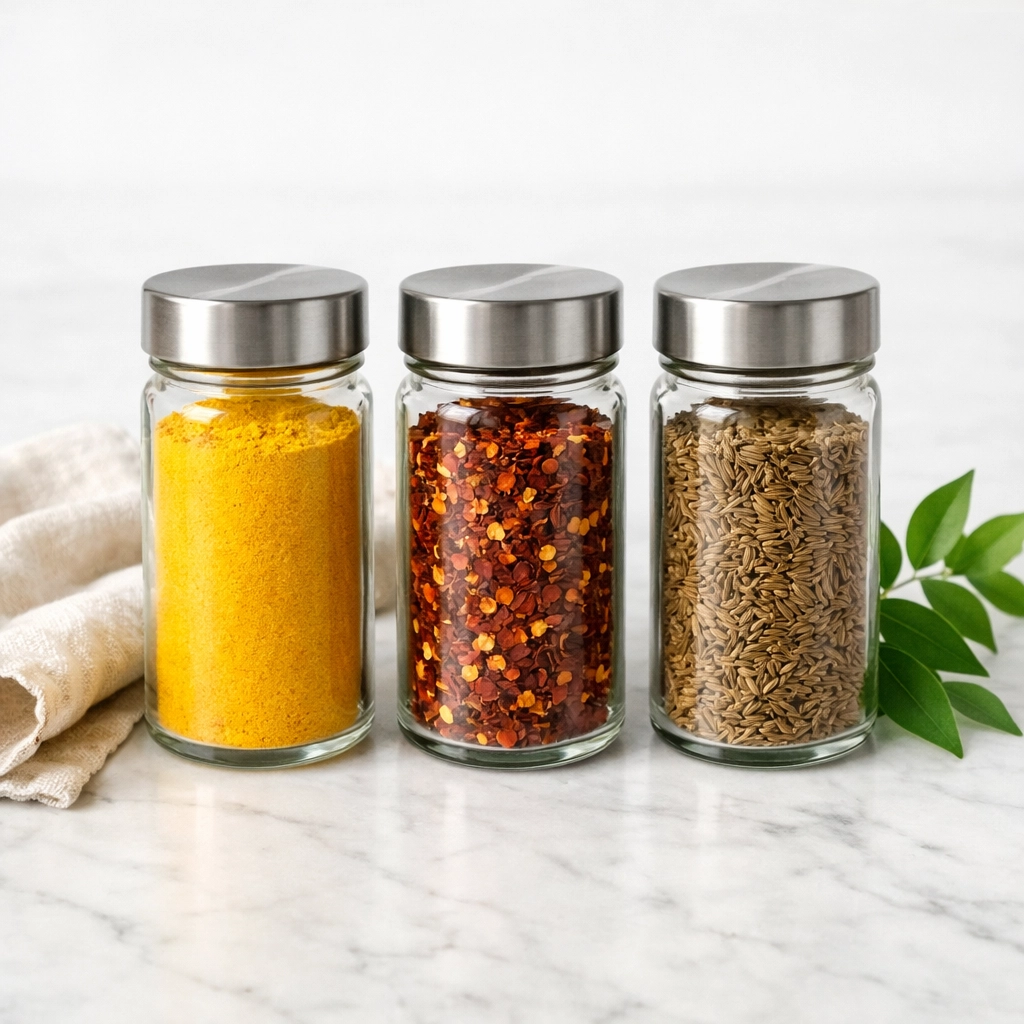
Caption: Transferring spices to uniform glass jars with clear labels not only looks great but helps you track freshness.
Why Sourcing Matters
Even the best storage can’t save a spice that was old before it reached you. Many commercial spices sit in warehouses for months (or years) before they even hit the supermarket shelf.
At Thottam Farm Fresh, we cut out the middleman. By sourcing directly from farmers in the spice heartlands of Kerala, we ensure that the time between harvest and your doorstep is as short as possible. When you buy from us, you’re starting with a product that is at its peak potency.
Our commitment to quality extends to how we pack. We use materials that protect against the “four enemies” mentioned above, ensuring that the magic of wild honey or the punch of our black pepper arrives in your kitchen exactly as nature intended.
A Note on Spice Hygiene
Every six months, do a “pantry purge.” Take everything out of your spice cabinet. Wipe down the shelves. Check your dates. If you find a jar that has been sitting there since your cousin’s wedding three years ago, it’s probably time to let it go.
Clean your glass jars thoroughly between refills. Oils from the previous batch can cling to the glass and turn rancid, affecting the taste of the fresh spices you put inside. A simple wash with warm soapy water and: most importantly: letting them air dry completely is all it takes.
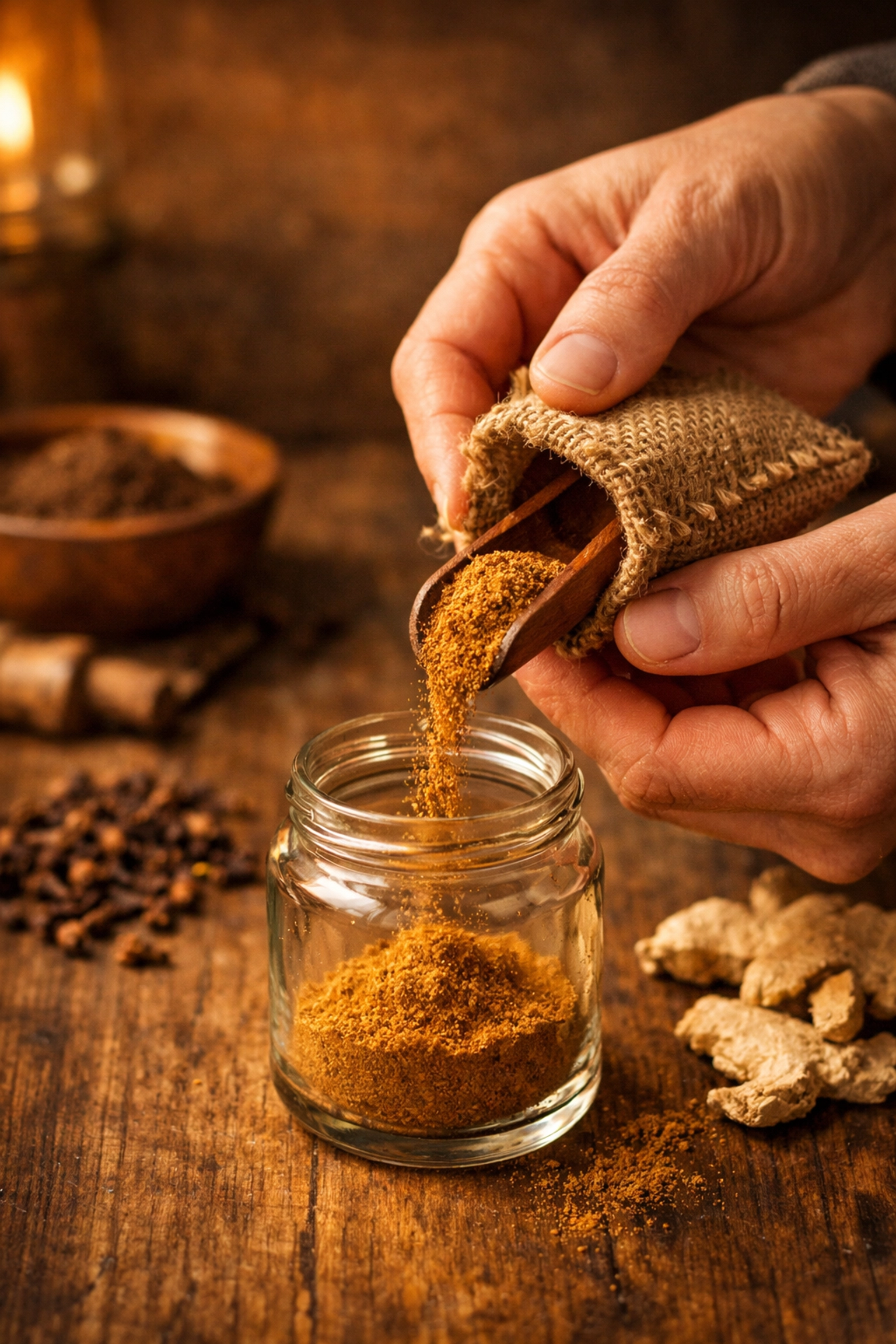
Caption: The ritual of cleaning and refilling spice jars is the hallmark of a cook who values quality and flavor.
Final Thoughts
Spices are more than just ingredients; they are the history and culture of a region captured in a seed or a bark. Treating them with a little bit of care goes a long way. By investing in glass storage, choosing whole spices, and keeping your collection away from the heat of the stove, you’re not just preserving food: you’re preserving the joy of cooking.
Ready to refresh your pantry with the freshest harvest? Explore our full range of specialty spices and experience the difference that farm-fresh quality makes. Your taste buds will thank you!